Healing
Reaction Formation & Repression: What Is the Difference?
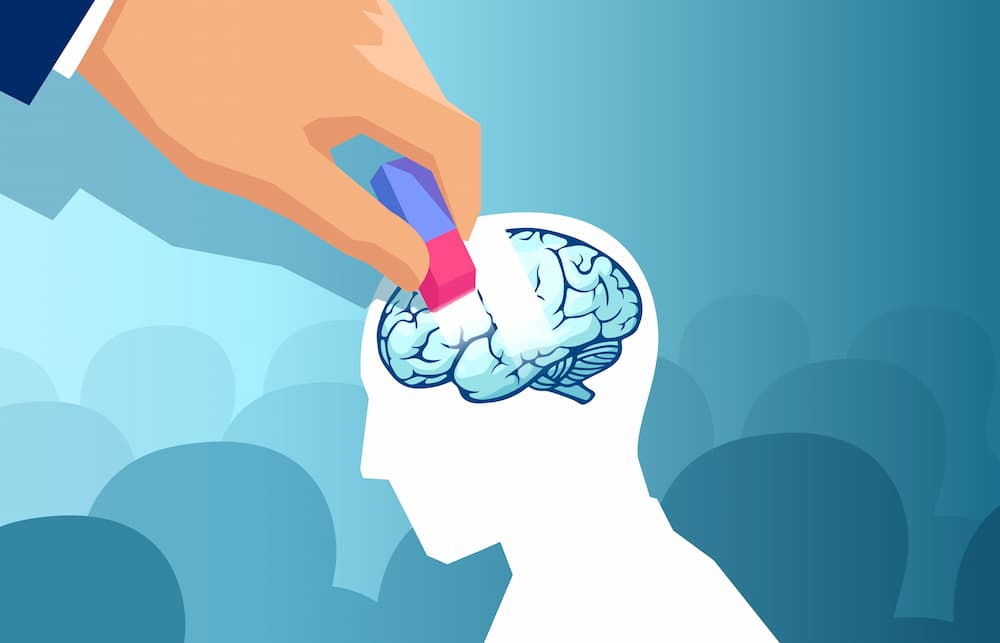
Reaction formation is a defense mechanism in which a person expresses the opposite of what they truly think or feel, in order to avoid acknowledging stressful or harmful emotions. Repression works differently: it pushes unwanted thoughts, feelings, and memories out of conscious awareness. Repression is primitive and inward-oriented, while reaction formation is an intermediate strategy that is mostly outward-oriented.
As each of us walks our path through life, we often encounter uncomfortable situations that test our emotional ability to cope well with difficulties and challenge our mental strength. Sometimes, we endure these trials, pushing forward with sheer determination and force of will. However, in some cases, doing so misses the lessons that life offers us.
In situations where stress, tribulations, and discomfort threatens to overwhelm us, our subconscious mind has a tendency to take the wheel. In psychology, this is known as “forming a defense mechanism”, a set of thinking and behavioral patterns whose purpose is to protect us from mental and emotional harm, representing one of the 12 defense mechanisms. Among these self-preservation strategies, the two most habitual (and most commonly studied) are repression and reaction formation.
However, while both serve the same purpose, they do so in essentially different ways which usually leads to vastly different outcomes. For this reason, as well as due to their undeniable ability to impact and, in some instances, define various aspects of our lives, learning the difference between repression and reaction formation can be absolutely crucial for our long-term mental, emotional, and social well-being.
What Are The Main Characteristics Of Repression?
Repression operates entirely on the unconscious level, which is what makes it so hard to notice. A person is usually not aware they are repressing anything, yet the buried material still seeks an outlet, and it is often accompanied by feelings of guilt or shame.
Sigmund Freud, the father of psychoanalysis, introduced the term “repression” in the late 19th century. He viewed it as one of the cornerstones of the human psyche and believed it was central in the development of many psychological disorders.
Definition of Repression
Modern psychology defines repression as a primitive (fundamental) defense mechanism that involves pushing (i.e. “repressing”) unwanted or distressing feelings, thoughts, or memories out of an individual’s consciousness, in order to deal with stress, anxiety, or traumas from the past.
Characteristics And Symptoms Of Repression
From the definition alone, we can find the first and main characteristic of this coping mechanism: it operates on the wholly unconscious level. In fact, this is the exact reason why it is so hard to notice and diagnose. However, there’s that old adage that “nothing stays buried forever”, which is all too true in this case.
For the most part, a person isn’t aware that they’re repressing thoughts or emotions. For example, someone who was bitten by a dog in their early childhood may develop a phobia of dogs in adulthood, without an obvious reason.
In most instances, this may not be evident even after the emergence of the related symptoms. Still, the fact remains that these buried feelings, thoughts, or memories need an outlet, which leads to different ways of manifestation:
- Psychological disorders, such as anxiety or depression, are a common repercussion of overusing repression;
- Dreams are a reflection of our subconscious mind and, as such, can serve as an outlet for repressed thoughts;
- Slips of the tongue can sometimes indicate the existence of buried feelings or memories.
In addition, repression is often followed by feelings of guilt and/or shame. When a person pushes down thoughts they believe are unacceptable or dangerous, they may start subconsciously believing that they are doing something “wrong”, even if that is not the case.

Is Repression A Bad Coping Strategy?
Although there is some degree of negative connotation to repression, it cannot be classified as strictly “bad”. Rather, it is a part of being human as everyone, no matter how mature or immature, represses feelings and thoughts to some degree.
However, when repression becomes a default operating method or becomes overused to the point of extreme, it can become a severe impediment to a person’s social well-being, as well as their mental and physical health.
What Is Reaction Formation In Psychology?
Reaction formation is a defense mechanism in which a person expresses the opposite of what they truly think or feel, in order to avoid acknowledging thoughts and emotions that feel harmful or stressful. It is considered an intermediate defense mechanism, which means it is less primitive and more mature than repression.
Its main characteristics follow from that definition:
- Purpose: it protects the psyche from thoughts, feelings, and memories a person finds unacceptable.
- Direction: it is mostly outward-oriented, because the difficult feeling is handled by displaying its opposite rather than by burying it.
- Awareness: it is employed almost exclusively on a subconscious level, though some degree of conscious effort is involved in using it.
- Triggers: internal or external stimuli can set it off.
Reaction formation can offer temporary relief, and like repression it works mostly outside of conscious awareness, so a person is rarely aware they are doing it. The consequences still reach their own life and the lives of the people around them, usually in a negative way, which is why more mature coping strategies are worth building in its place.
How Are Repression And Reaction Formation Similar?
Both are defense mechanisms that protect the psyche from thoughts, emotions, and memories a person finds unacceptable. Both run almost entirely on a subconscious level, both can be set off by internal or external stimuli, and both redirect difficult material away from conscious awareness.
To understand both the similarities and differences between repression and reaction formation, first, we need to familiarize ourselves with the latter.
By definition in psychology, reaction formation is an intermediate (less primitive, more mature) defense mechanism that involves expressing the opposite of what one truly feels or thinks, in order to avoid acknowledging harmful or stressful thoughts and emotions.
With both strategies now defined, we can start breaking them down into core components, to see how they really function and relate to each other.
What Are The Similarities Between Repression And Reaction Formation?
While repression and reaction formation are two essentially different coping mechanisms, they do share a lot of similarities. We already mentioned some of them, but we’ll reiterate for clarity:
- Purpose: Both defensive mechanisms serve to protect the psyche from uncomfortable, unacceptable, or harmful thoughts, emotions, and memories.
- Awareness: Both strategies are almost exclusively employed on a subconscious level.
- Triggers: Both can be triggered by internal or external stimuli.
- Process: Both involve the redirection of difficult thoughts or emotions away from conscious awareness.
From the above, it may seem logical to conclude that reaction formation and repression are the same since they share so many commonalities on the core level. However, this is not the case. Although both serve to establish and/or maintain psychological equilibrium within one’s conscious mind, they do so in vastly different ways.
What Are The Differences Between Reaction Formation And Repression?
They differ in effort and in direction. Repression is primitive and requires no conscious effort, pushing thoughts and feelings inward and out of awareness. Reaction formation is intermediate, involves some degree of conscious effort, and works outward by expressing the opposite of the real feeling.
Despite obvious similarities, repression and reaction formation are two distinct defense mechanisms. Right off the bat, we can see one major distinction from their respective definitions alone:
- Repression is a primitive defense mechanism, which means it requires no conscious effort to employ. Rather, it takes place entirely in the subconscious.
- Reaction formation is an intermediate coping strategy, meaning that some degree of conscious effort is involved in its utilization.
Next, there is a big difference in how both mechanisms help a person cope with harmful thoughts and feelings (again, evident from the definitions):
- Repression entails pushing unacceptable thoughts, feelings, and memories into the subconscious. As such, we can say that it is a wholly inward-oriented process.
- Reaction Formation involves expressing the opposite of what one truly thinks or feels. In that, it is mostly outwards-oriented.
It is important to note that the consequences of using either process, whether inward or outward-oriented, can end up impacting a person’s life, as well as those around them, usually in a negative way. Therefore, it is highly advisable to seek alternative, healthier ways to deal with negative emotions and thoughts, mainly by adopting more mature coping mechanisms.
FAQ: Repression and Reaction Formation
Repression is a primitive, or fundamental, defense mechanism. It pushes unwanted or distressing feelings, thoughts, and memories out of conscious awareness, so a person does not have to face stress, anxiety, or traumas from the past. It works entirely in the subconscious, which is why a person rarely notices they are doing it.
Reaction formation is employed almost exclusively on a subconscious level, so a person is rarely choosing it deliberately. The difference is one of degree. Repression takes place wholly in the subconscious and needs no conscious effort, while reaction formation is an intermediate strategy that involves some degree of conscious effort.
Not in the long run. Reaction formation can bring temporary relief, but the consequences of showing the opposite of what you feel usually reach both your own life and the lives of the people around you, in negative ways. The healthier path is to build more mature coping strategies in its place.
Both mechanisms can impact, and in some instances define, various aspects of our lives, so learning to tell them apart matters for long-term mental, emotional, and social well-being. Repression buries a feeling out of awareness, while reaction formation displays its opposite, and recognizing which one is at work makes it easier to look for healthier ways to cope.
PIVOT Can Help You Deal With Repression & Reaction Formation
While defense mechanisms such as repression and reaction formation can provide temporary relief, they are detrimental to every aspect of your well-being. Fortunately, they don’t have to define or control your life. With PIVOT’s help, you can take that control back and give your life a positive turn. Our Glass House Retreat is the perfect place to begin your journey to recovery, as it offers a safe and serene space where you can explore and address the underlying causes of your defense strategy. Our compassionate and mindful professionals will accompany you every step of the way, start to finish, and help you develop healthier coping strategies. Reach out to us today and begin down the road of recovery that will lead to happier and more committed relationships and healthier ways to deal with tribulations in your life.