

In A Relationship & Thinking About Someone Else: What To Do?

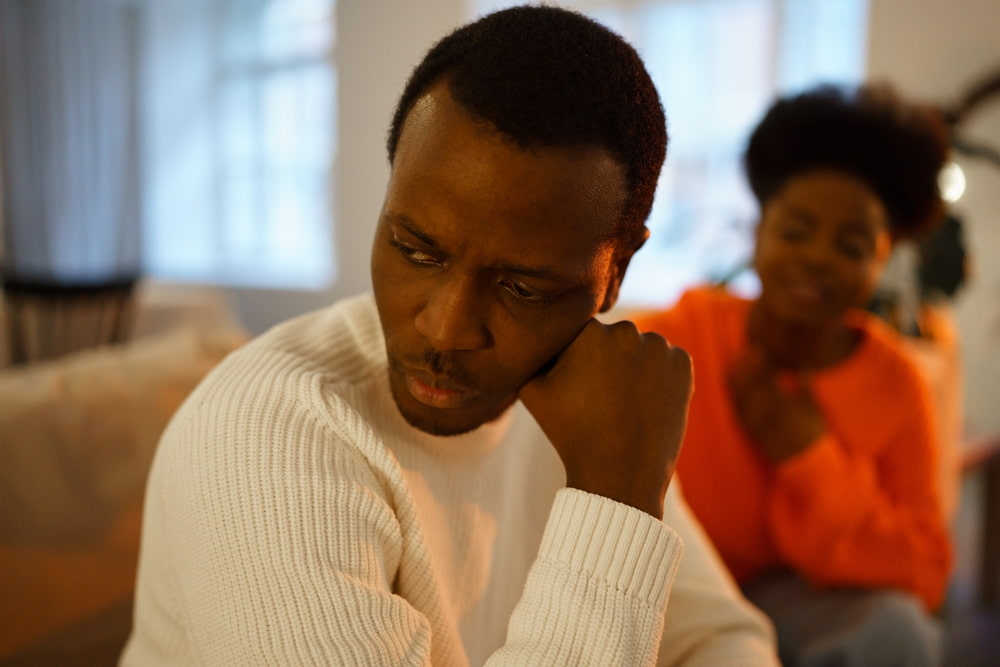
Relationships face many challenges over the years. While infidelity can definitely be the death of a relationship, can thinking about another person have the same effect? If you’re in a committed relationship and you’re trying to make sense of your attraction to another person, read on. You’ll discover the reasons that may be causing this attraction, such as being in a love avoidant relationship, so that you can take the first step toward dealing with these challenges.

Why Am I Thinking About Someone Else While In A Relationship?

Feeling attracted to someone while you’re in a committed relationship can be confusing and troubling. However, this can happen to anyone and for many reasons, like:

  • You’re excited by the newness of the situation: If you’ve been in an exclusive relationship for a while, the excitement of the honeymoon period is long gone. Sometimes, you may just be looking for a change, and your attraction for a new person provides you with the excitement you crave. However, you can often recreate the same sense of adventure within your existing relationship if you make some small changes and rekindle the passion.
  • Something in your relationship isn’t working: You may not like the other person as much as you dislike an aspect of your relationship. Maybe there’s a long-standing issue in your relationship that you can’t seem to solve. Your interest in the new person may be a distraction from these disappointments. While your relationship is very real, with all its ups and downs, your crush is most likely a blank canvas that you can fill with fantasy of what you wish you had.  
  • The other person is offering you something your partner isn’t: The other person may have attracted you by reminding you of something you lack in your relationship. For example, your partner may not show enough support for your ambitions and this person may seem very nurturing and supportive. 

Is Thinking About Someone Else Considered Cheating?

This depends on the partners’ views on fidelity. While some people draw the line at physical affection, others consider thinking about another person to be as serious. However, in most monogamous relationships, whether you think of it as cheating or not, finding out that your partner harbors intense romantic feelings for someone else is very hurtful.

Do I Need To Break Up With My Partner If I Have Feelings For Someone Else?

No, you don’t have to end your relationship because you’re attracted to another person. The attraction will likely die down if you don’t nurture it. There are also several things you could do to get over your crush and continue thriving in your current relationship

On the other hand, you may also decide to pursue a different path and further explore your relationship with the new person. In both cases, it’s important to be honest to both people and set things straight. This choice typically ends up producing more problems.  It never is quite like you think it will be.  Jumping from one relationship to another is not the best way to end a long-term relationship.  

What Do You Do If You’re In A Relationship And Like Someone Else?

Although it may seem counterintuitive, this newfound attraction can actually help your existing relationship. Yep, you read that right.  It can make you reflect on some important things about yourself, your expectations, and how your current partner fits into it. Here are some things to try:

  • Give it some time: You need to give yourself some time to think about things and determine what the actual source of your attraction is. Does it signal that you’d like a change in your relationship? Is it only passing infatuation? Or maybe you could actually be a match? These questions are for you to answer, don’t rush it; however set some bottom lines for yourself.  If you don’t set some bottom lines, it could become physical and you may end up cheating on your partner.  This can bring devastating consequences. .
  • See what you can learn from it: Reflecting on your crush can give you an invaluable insight into what you need and want from a relationship. You may become aware of some aspects of your relationship that are rubbing you the wrong way. You can then use this understanding to work on your bond with your partner.
  • Keep your distance: If you decide that you want to stay in your current relationship, protect it by staying away from your crush. If possible, avoid meeting them or interacting with them online and in person.  No Contact. If you can’t help communicating with them, perhaps you work together, don’t try to charm them or connect with them on a deeper level. Although it’s difficult to stay away, this is the best way to get over them.  Please, get help if you don’t want to damage your committed relationship. 
  • Try to make changes in your committed relationship: Once you’ve established that there’s room for improvement, talk to your partner openly and try to work on the challenges together. You’ll likely grow even closer when you share your feelings this way. Also, you’ll probably have your needs met more effectively. You’ll probably also find out what you could be doing to make your relationship stronger. 
  • Channel the sexual energy into your relationship: Spice up your sex life or go on more dates to bring back some of the excitement of the initial stages of your relationship. This will give you a sense of newness and help you rediscover the things that made you fall in love with your partner in the first place.

Where Can I Find A Great Private Couple Retreat For Reconnection?

Thanks to our experience and compassion, PIVOT can help you gain a deeper understanding of yourself and your relationship. Our tailored curriculum will make you think about your early experiences and how they’ve shaped the person you are today. If you’ve had a hurtful experience, such as breadcrumbing, you can learn important takeaways and how to avoid it in the future. Simply sign up for our client-centered coaching sessions for individuals.

If you’d like to approach your relationship challenges as a couple, we also offer comprehensive couples workshops where you can work on issues together. Our friendly relationship advocates will guide you through the process of growing stronger as a unit. Get in touch with us to start the exciting journey of healing and discovery!

How Your Relationship Affects Your Personality

Partners grow and change throughout their relationship and their personalities evolve over time. Romantic relationships are a big part of everyone’s life, so it’s only natural for them to shape people in major ways. Since you share so much of your experiences with your partner, developing in similar ways is common.

If you’d like to find out how your relationship can affect your personality, whether couples truly become more alike or different, and why this happens, read on. This may help you recognize unhealthy patterns in your or your partner’s behavior, such as avoiding intimacy in your relationship, and help you begin to work to establish a stronger connection.

Does Your Partner Affect Your Personality?

Yes, chances are that your partner will affect your personality, similarly to other people close to you. They’re a part of your everyday life and your close proximity could lead to unconsciously mimicking each other’s behavior. Your partner’s actions may also directly contribute to shaping your personality, both in positive and negative ways.

Does Your Partner Affect Your Personality?

How Do Relationships Affect Personality?

Relationships could affect different aspects of your personality. When the influence is positive, it contributes to changing your unhealthy habits for the better. Your partner knows you very well and can spot unhealthy patterns you didn’t realize you had. They can also provide support in overcoming these issues

People can often adjust their behavior based on their partner’s example. This can manifest itself in little things, such as eating healthier, or major ones, like having better control of your emotions. Being happily in love is often an excellent agent of change because the positivity can spill over into other parts of your life. 

On the other hand, relationships may have detrimental effects on you as a person if they’re unhealthy. For example, having a jealous, overbearing partner can make a person more timid and insecure. Their anxiety may make their partner become withdrawn and feel cut off from the outside world. Unhealthy relationships often leave deep emotional scars, affecting the person’s self-esteem and making them vulnerable to further emotional abuse. 

Prior to Pivot, I had been on both sides of that dynamic and it was not fun.  And, that is an understatement.  It was painful, confusing, depressing and affected my own self-esteem in ways that I describe in the #Healthy Adult book.  The co-addictive tango dance of the overly anxious and avoidant individual in relationship is a pattern that we see a lot at our individual couples retreats.  Interestingly enough, they are typically two people who love each other however the unresolved relational wounds and trauma of the past, keeps them repeating the patterns in their committed relationships. So, personalities are definitely affected. Read on…

Do Couples Become More Similar Over Time?

Both everyday experience and research suggest that long-time partners truly do become more alike. This also occurs with family members and close friends. This is not a negative however it is interesting to understand because overtime, resentment might surface and blaming each other for losing your individuality  follows.  

Being similar may happen in multiple ways, such as:

  • Using similar mannerisms: People often imitate the body language of those they interact with. This is done unconsciously, to establish better rapport, gain the other person’s trust, and form a connection. It comes as no surprise that you’d mimic your partner’s gestures and facial expressions. This could make you seem more alike to the people around you.
  • Having some of the same habits: Partners usually adapt their pre-relationship routines to the other person’s schedule and habits. For example, you may grow accustomed to eating and going to bed at the same time, especially if you live together. Because you consider these things as a unit, you’ll likely have the same plans for the weekend or the holidays, too. 
  • Saying the same phrases: You talk to your partner a lot, so you’re exposed to their speech patterns all the time. This inevitably leads to adopting some of the same sentence structures and other features of their way of speaking. What’s more, happy couples often have a well-developed language of their own, rich with inside jokes and idiosyncrasies. When you use these phrases around others, they may perceive you as more similar.
  • Liking the same things: Your partner may introduce you to new things, which can alter your lifestyle in many different ways. For example, you may start having your morning coffee or eating your eggs differently. On a larger scale, as a result of their influence, you may change your social circle or rethink your career choice to be more in line with theirs. 
  • Having similar topics of conversation: Since you go through many experiences together, you probably have similar anecdotes to share. For example, because you go on vacation as a family, you’ll have visited the same places and met the same people. This means you’ll probably have similar stories to relate to your friends back home.
Do Couples Become More Similar Over Time?

Why Do Couples Start Acting Alike?

You spend a lot of time together and share your most intimate visions of the world, so many of their interests, opinions, and character traits will probably rub off on you, and vice versa. For example, through discussing everyday situations, you may easily adopt their views and interpretations. This goes for everything, from how you see the people around you to how you interpret current events.

Also, together you go through many profound changes, such as moving or having children. These milestones often have a similar impact on both of you, making you more alike. In addition, your partner’s reactions to them may shape the way you perceive them as well. For example, if they adjust to parenthood smoothly, you’ll be more likely to adopt their relaxed attitude and take these changes in your stride.

Finally, your partner is someone you respect and admire. You may model your behavior based on this positive example they’re setting either consciously or unconsciously. For example, you may like the way they communicate with people, so you in turn become friendlier and more open than you used to be. 

Again, this is good to have similarities however if you are feeling you are losing your own identity, you may want to find your way back to yourself.  Like I shared above, if you are starting to get resentful, get help before you feel like the only way to return to self is to leave the relationship.  And, that can be disruptive and create irreparable damage and unnecessary drama and trauma.  

How Can A Comprehensive Codependency Workshop Help My Relationship?

PIVOT provides in-depth, personalized assistance to people struggling with codependency or another issue affecting their relationship and overall well-being. If you’d like to work on an aspect of your relationship, such as a lack of passion or the fact that you’ve stopped having fun together, you could join our couples workshops to work out suitable solutions. We also offer individual sessions to help you strengthen your relationship to yourself and others. Here you can discover your attachment style, pinpoint the things you need in your relationship, find out how to respond to conflict, learn how to spot hurtful behavior, like breadcrumbing, and much more. If you’re experiencing a specific issue in your relationship, like fantasizing about someone else, we can help you explore it. Give us a call today!

The Importance Of Dating In Your Relationship

The longer you’re in your relationship and the more you’re feeling the love and the security from your partner, the easier it is to allow your relationship to grow a bit stale. And that’s all normal at one point or another. It happens to many.

However, allowing this to go on can be detrimental to your relationship over an extended period of time. Enter dating as one of the best and most enjoyable methods for keeping your relationship fresh and exciting as ever. 

Try to date your partner a bit. Try to find enjoyment again. Try to become interesting to one another again, and most of all, try to love each other more and more. Also, don’t shy away from visiting a relationship building skills workshop for couples and working on your relationship.

What Is Dating In A Relationship?

What Is Dating In A Relationship?

You know how you used to go out to the movies or how you’d grab dinner at the restaurant in your town? Maybe you and your partner would go to jazz shows or comedy nights or double date with other interesting couples. Maybe you just liked to take long walks along the street after a meal, talking until the small hours of the night. That’s dating.

Can you remember the feeling you had when you and your partner used to do all those things? Remember the excitement of awaiting your significant other to arrive, and the enjoyment you’d get from spending time with them? That’s also dating. 

Dating is all the things you and your partner did before you entered your committed relationship. It’s also the things you did while in your relationship that gave you the feeling of enjoyment, warmth, and pleasure. It’s all the things you love doing together, and maybe all the things you forgot somewhere along your road to a long-term relationship. 

Why Is Dating In My Relationship Important?

Dating is important because it feels good. That’s the single biggest reason for dating your partner even when you might be years into your relationship. However, the importance of dating goes further than just allowing you to spend enjoyable moments together with your significant other. 

In fact, it’s this essence, the joy of dating that inspires all the other benefits of continually dating your partner no matter the amount of time you’ve spent together. 

It’s important to date your partner because: 

  • Quality time together will strengthen your relationship.
  • Dating will help you build your unity and also express your individuality to your partner.
  • You’ll get a chance to reconnect with your significant other and eliminate the feeling of being two ships passing each other in the night.
  • You’ll enhance and deepen your communication.
  • Dating gives you ample opportunities to build new memories together.
  • You have a chance to show your partner how much you care for them and that they’re your top priority.
  • You and your partner will keep the flame of passion and romance burning bright for a long time.
  • You’ll keep mixing it up, maintaining the freshness in your relationship.
  • Both of you get a chance to show the depth of your love and affection.
  • Dating means you’ll keep finding the time for each other.
  • Dating also keeps you from getting bored.
How Often Do I Date My Partner?

How Often Do I Date My Partner?

Honestly, there isn’t a rule that says how often you and your partner need to date to keep the passion burning bright. For some couples, once a week is plenty, while for others, it’s either too little or too much. We can’t say that any of them are wrong, as being with someone means doing the things you enjoy when you enjoy them. 

However, date your partner as often as you can and in all the different ways you can think of. Dating your partner is more than just reserving a table at your favorite restaurant and going for a movie afterward. Dating your partner is also doing all the little things in between and showing just how much you care whenever you can. It’s the hand holding, the active listening, the simple gestures that you know your partner likes. 

The most important thing to know about the frequency of dating your partner is to remember. Remember to surprise them and remember the things they love. Remember the dates and remember the events. Remember to be there for them and remember to do all you can to make them feel special in a way you’d like them to make you feel. 

How Can I Continue To Date My Partner?

Continuing to date your partner even though you’ve been in your relationship for a long time is essential for maintaining the health of your relationship and keeping both you and your partner satisfied. 

If you’ve neglected this part of your relationship for one of numerous reasons, there’s no need to worry. Dating again is not difficult, although it does require some effort. Luckily, there’s plenty you can do to begin anew. 

9 Ways To Keep Dating Your Partner

The first and the most important advice when it comes to dating your partner is to start with what feels right for you and to do the things both of you enjoy doing. That being said, if you’re feeling stuck, it’s helpful to have a couple of pointers that’ll help you reignite the old spark: 

  • Do all you can to practice your romance.
  • Combine the familiar activities and create new and exciting ones you can enjoy all over again.
  • Find the time to be truly with each other, not just spend time one beside the other. In other words, put it on the calendar!  
  • Set aside time for date nights when you both feel like going, and even when you don’t.
  • Remember to do all the little things.
  • Openly communicate about your needs, both romantic and intimate.
  • Find new activities you can enjoy together.
  • Be mysterious with each other from time to time.
  • Have fun with each other as often as possible and make each other laugh.

PIVOT’s Relationship Building Skills Workshops For Couples Will Teach You How To Keep Dating

Just because you’ve dated before doesn’t mean there’s no reason to keep dating your partner throughout your long-term relationship. Dating is a crucial aspect of both keeping the passion in your relationship alive and well and continually showing the love and the support your partner and you require. Dating is caring, loving, feeling, and much, much more. 

Unfortunately, saying “date your partner” is easier said than done. Both of you have your daily responsibilities, worries, ups and downs, your passions, hobbies, free time activities, and many other things. This can cause you to push your dating aside which, in turn, can lead to different issues, even you or your partner starting to think about other people.If you feel like your relationship is hitting a serious set of issues you cannot resolve on your own, PIVOT’s here to help you. Our expert advocates hold individual workshops for helping you find the spark again, as well as couple workshops designed to help you overcome your problems. Give us a call today and we’ll do everything we can to help!

Why Is Support In A Relationship Essential?

Sometimes, support and understanding are all we need from our partner. It’s easier to experience life’s lows if there’s someone to give you compassion, active listening, and empathy. On the other hand, if the support’s absent and nowhere to be found, things get tougher, tougher, and tougher. 

Do you and your partner ask each other the standard what’s up? How are you?  How’s it goin?  How was your day?  I’m curious – do you listen?   Do you tell?  Do you emotionally bomb one another?  Think about it for a minute and get honest with yourself. 

Do you discuss your individual problems, concerns, wants, and wishes? Are you there for each other when the times are confusing, complicated, and challenging? Are you their shoulder, and they yours?

That’s what support is, or at least what one aspect of it is. Not having it is one of the things that can cause a relationship to suffer. It can make it easy to start thinking about how to leave your toxic relationship. However, lack of support isn’t toxic, and it won’t become toxic if you try to work on it. There’s a lot you can do to change the tides of your relationship.

Why Is Support In A Relationship Important?

Supportive relationships are healthy relationships. They’re caring relationships. They’re empathetic relationships. Most of all, relationships in which partners experience mutual support are extremely important to your and their emotional and mental well-being. That’s one of the essential reasons it’s crucial to share your life with a partner who’s there to support you and the things you do.

Having a partner who’s there to provide all the different types of support you need enhances your quality of life and allows you to reach new heights, both individually and within your relationship. And it works both ways. It feels good to be the point of support for your partner as well, to see them tap into all the potential they didn’t think they had. 

However, the key lies in the mutual support. Only being on one end of it doesn’t cut it since support is important for both of you. And, it does not mean that your partner is solely responsible for your feelings.  You are. 

What Are The Important Aspects Of A Supportive Relationship?

Not all people know what it’s like to be in a relationship where you can truly rely on your partner. This is why the first step in your journey toward support is to explore what the aspects of such a relationship are. 

10 Elements Of A Supportive Relationship

All relationships are unique. However, when it comes to support, you’d be surprised at just how many similarities there are from one supportive relationship to another. After all, happiness shares common characteristics across all relationships and support is no different. 

Here are a couple of common threads: 

  • You and your partner spend quality time together on a regular basis.
  • You listen to each other and show empathy toward your problems.
  • You mutually encourage each other’s growth and development in different areas and using various methods.
  • You pay attention to your partner’s feelings and the things going on in your lives.
  • You offer help and you help your partner through the good as well as the bad.
  • You refrain from judging each other and focus on discussing your differences if necessary.
  • You foster tender and caring honesty.
  • You and your partner both feel safe and secure in your relationship.
  • You’re there for each other when you need it and can ask for what you want and need.  And, if it is not possible for your partner to give it to you, you can understand and take care of yourself.  

What Are The Characteristics Of A Supportive Partner?

To be completely honest, there’s no one set of skills that makes one partner supportive and the other one unsupportive. Support comes in many forms and takes on different shapes depending on each individual and the situation they’re finding themselves in. 

However, there are certain traits that many supportive partners share. Knowing what they are can help both members of a relationship recognize whether they have them or not and start working toward becoming a better partner.

Traits Of A Supportive Partner

Some of the most common traits supportive partners exhibit include: 

  • Respect toward your partner’s feelings
  • Ability to truly listen to what your partner has to say
  • Showing true consideration for your partner’s problems
  • Possessing the ability to say you’re sorry
  • Not shaming your partner if they tell you no because it truly doesn’t work for them
  • Being helpful when your partner needs it
  • Respecting their “me” time
  • Taking the time to be intimate with your partner
  • Sharing your dreams and having common dreams with your partner
  • Refraining from placing high expectations on your partner
  • Viewing your partner’s needs with the same level of respect as you would your own

How Can I Build A More Supportive Relationship?

Not receiving the support you need is tough. However, know that it’s probably tough on your partner too if you’re the one failing to deliver the support they need. Luckily, building support is possible. 

Support is not having and/or demanding expectations that are unclear and unrealistic. 

First and foremost, know that offering support works both ways.  It’s crucial to give support as well as to receive it. Second, noticing and getting honest that there is a lack of support in your relationship is something you and your partner can definitely work on together. It’s not a deal breaker, just a point of necessary improvement. You can do it, you just have to start!   

13 Ways To Build Relationship Support

There’s no time like the present and no better way than to explore some of the things you and your significant other can do to enhance support in your relationship. Know that these methods are just the beginning and that support is something you keep giving. 

Here’s how to start: 

  • Make an honest commitment to listen to your partner and do it
  • Be clear about your want and/or need if asking and make sure it is realistic
  • Be respectful to your partner’s point of view – when they are sharing it, even if you don’t agree, meet it with phrases like, “tell me more”, “is there anything else?”, “I’m glad you are sharing how you feel”. 
  • Be as empathetic as possible
  • Try to offer help, not just wait for your partner to ask for it
  • Communicate with your partner often and honestly
  • Be there to encourage your significant other and spur them on
  • Be there to talk to your partner’s ambitions, dreams, desires, and fears
  • Grant your partner the benefit of the doubt and give them moments of necessary solitude
  • Ask the questions you would like your partner to ask you.  
  • Model what you’d like
  • Be completely present when your partner needs to talk
  • Show your partner that you appreciate them
  • Give your significant other a chance to do their things their way
  • Practice doing small and thoughtful things

PIVOT Can Help You Incite Support Without Leaving A Potentially Unhealthy Relationship

If there isn’t ample support within your relationship, chances are that unhappiness will slowly come bubbling to the surface. From slowly losing the flame of your passion to gradually beginning to think about other people, lack of support can cause a lot of other issues. 

This makes actively working on supporting your partner and experiencing support in your relationship one of the most important aspects of a healthy relationship. Sometimes, continually dating your partner isn’t enough and you have to put in more effort. However, there are times when you simply don’t know where or how to start tackling these issues.That’s where PIVOT comes in. We’ve assembled a team of experienced, caring, and empathetic coaches and advocates who guide you through both individual workshops and activities for inspiring support and couple retreats to help you find support mechanisms in your relationship. Reach out to us today and we’ll help you find your common ground.

How To Rekindle Your Relationship Passion

Many couples experience the ups and downs of passion in their relationships. It’s virtually impossible to experience a long-term relationship without also experiencing the times of intense passion and the times when that passion is lacking a bit.

However, not feeling the fierce, roaring flame of passion all the time is one thing. Not experiencing it at all for a long time is something completely different. Ruts happen. Long droughts, on the other hand, are a true concern that require effort and time to overcome. 

This problem can cause prolonged issues with intimacy in your marriage or relationship, causing you to find professional assistance at an emotional workshop or retreat. However, it’s also important to first see what the signs of waning passion are and how to overcome them. 

Is It Normal To Lose Passion In A Relationship?

Is It Normal To Lose Passion In A Relationship?

It’s tough to say what’s normal in a relationship and what’s not. After all, people and relationships are different, and the problems couples experience are unique to their circumstances. Periods of stronger and weaker passion happen for a variety of reasons.

However, referring to the complete absence of passion as “normal” could do a disservice to couples who just aren’t feeling it as they once did. On the other hand, labeling it as “not normal” may also cause confusion and discomfort. The simple truth is that couples can lose feelings of passion and that it’s important to work on resolving the underlying issues and causes. 

What Are The Reasons That You’ve Lost Passion In Your Relationship?

The first step in rekindling the flame of passion in your relationship and finding that desire for intimacy is to understand why you’ve lost touch in the first place. Keep in mind that I am not just talking about sexual intimacy!  I am also speaking to emotional intimacy.  Without clearly identifying the reasons behind your current problems, it’s difficult to start the road of recovery and discovery again.

7 Reasons For Dying Passion In A Relationship

As said, all relationships and the issues that can appear are unique to each couple. While there’s no such thing as a comprehensive list of reasons why your passion might be failing, some of the most common causes include the following: 

  • As your together-life evolves, you slowly allow other priorities to take hold of your entire relationship, letting your connection slip through the cracks of everyday struggles. 
  • At one point or another, you, your partner, or both of you have simply stopped putting in enough effort into keeping the fire of intimacy burning as bright as it once did. 
  • Your intimate life has gradually become comfortable, routine, and even uninspired, causing you to potentially lose interest. 
  • Letting go of your own self-care can also be the cause behind dwindling passion. This can lead to you and your partner not feeling satisfied with yourselves, losing your libido in the process. 
  • Your or your partner might be holding grudges you simply cannot let go of for some time, causing you to be less interested in romance and more interested in retribution. 
  • There’s been a transition from passionate to companion love
  • You’ve stopped doing things with one another and slowly started drifting apart in different areas, including intimacy. 
  • You may have a biological shift in your mental health and the desire is overridden with anxiety and or depression and you are not treating it. 

How Do You Rekindle Your Desire In Your Relationship?

If we’re being honest, rekindling passion can be tough for some couples. However, it can be incredibly fun. In fact, it can breathe new life into your relationship and make it stronger, more enjoyable, and more passionate than ever. If that’s not a reason to give it a go, then nothing is.

7 Ways To Rekindle Relationship Passion

How Do You Rekindle Your Desire In Your Relationship?

If there’s love and all other positive emotions, there can be passion again, and soon rather than later. You and your partner just need a gentle push in the right direction. 

Here are some ways that can help you achieve that: 

  • Speak to each other about how you used to have so much passion without blame – when you couldn’t get enough of each other and see what was different back then. Try to do some of the things you loved doing back in the day and see the passion make a slow-and-certain return. 
  • Be honest and communicate your innermost desires with your partner and allow them to do the same. Get to know each other’s intimate needs better and start translating words into action. 
  • Prioritize yourselves and your intimacy above other daily things. Don’t make a chore more important than you. Start dedicating more and more time to one another and the spark will come back. Start with having date night again.  And, keep doing it. 
  • As simple as this one’s going to sound, as simple it’s to try it – get physical and get physical as often as you can. It doesn’t have to be all fireworks all the time.  Nor does it have to be intercourse.  Touch each other.  Hold each other.  Make a point to look into each other’s eyes with appreciation and affection.. The more you try, the more natural  it’ll become. 
  • Be curious and explore. Who knows, maybe you and your partner will discover a whole new world of intimate pleasure without even meaning to, granting yourselves many enjoyable future moments. 
  • Introduce the romance back, try harder, do beautiful things for each other, and dedicate your time and energy into making your partner feel as special as you’d like to feel. 
  • Understand that it might take some time for the passion to return. Don’t rush it – work on it constantly and incessantly. 
  • Be open to new experiences and be open to your partner. Work on it together and the results will come. 
  • Consider consulting a professional. Some couples may need some neutral insight or assistance with identifying the underlying issues in their relationships. Don’t be afraid to reach out to a relationship coach if you feel stuck. 

PIVOT’s Intimacy In A Marriage Intensive Workshop Will Help You Find Passion Again

Keeping the passion in your relationship alive is an essential part of a healthy and thriving relationship. Rekindling your flame over and over again can be difficult. However, you need to keep at it, keep investing, keep dating your significant other, and keep providing all the support you and they need. And you’ll get there. Sooner than you might think. 

Not only will the loss of passion cause you to potentially start thinking about other individuals in different ways. It will also slowly take more and more from your enjoyment and growth. If there’s love, respect, support, and a picture of the future, give it your all and work on it.Sometimes, your all may not be enough, and to keep resolving some of the issues in your relationship, you may need professional assistance. PIVOT’s individual workshops for resolving relationship problems and couple retreats for working on your relationship are designed to help you through the rough patches and rebirth your relationship again. Give us a call today!

How to Say “No” In Your Relationship

If we’re being completely honest, we rarely like hearing the word “no” ourselves, especially from our partner – the one person in the world who’s there to have our back and support us. However, that’s not exactly the right way of looking at relationship “nos”, is it?

And that’s the main problem with a “no”. The perception of it, which is why, in addition to not liking the sound of it, we don’t like to say it either. It’s as if the mere action of refusing your partner meant that you’re letting them down or looking at how to get out of a relationship.

That’s not how it’s supposed to be. There’s no betrayal, lack of love, affection, or empathy in saying “no” to your partner every once in a while. After all, not every idea is a good idea. It’s worth exploring the power of “no” and how you can learn to implement it. 

What Does It Mean To Say “No” In A Relationship?

Some people lack the ability and the desire to say “no” in a relationship because they feel that less disagreement equals no conflict. Others fear that refusing their partner’s ideas will only lead to long-term deepening dissatisfaction, ultimately grinding their relationship to a premature and hurtful ending. 

There are even more reasons but the result remains the same. You, or your partner, or both of you refrain yourselves from saying “no”, causing more harm than good over time. That’s why it’s important to clarify exactly what it means to say “no” to your partner and everybody else, and potentially remove the stigma associated with such a simple word.

Saying “no” means you’re simply valuing your, and not just somebody else’s wishes. It means that you’re trying to validate your own desires and feelings. It means you believe you can be completely honest with your partner. It means deepening your relationship and allowing yourself to be your true self. 

Why Do I Need To Learn To Say “No”?

Why Do I Need To Learn To Say “No”?

Refusing is not shooting down your partner and warding off their happiness. It’s being true to yourself and feeling enough confidence in them and your relationship that you feel comfortable not saying “yes” to everything. This is how you start paving the way for beneficial experiences in your life, such as: 

  • Better valuing your time and the time you spend with your partner
  • Knowing what you want out of your relationship
  • Saying “no” to one thing means saying “yes” to something else
  • Enhancing the honesty in your relationship and toward your partner
  • Giving others and your partner a chance to say “yes” to you

When Can I Say “No” In My Relationship?

There are no strict rules about when it’s OK and when it’s not to say “no” to your partner. Saying no is simply expressing how you feel about something. Some of us may enjoy saying “yes” to something because we want to please the other person.  That is ok unless you are going against your own true feelings.  Since it’s about your own personal feelings, don’t refrain from telling your partner “no” if: 

  • You simply don’t feel that into it
  • You’re not ready for something
  • You’re scared of it
  • You’re too busy with more important obligations
  • You’re being made to feel guilty or ashamed for refusing
  • You have a bad feeling about the proposition

However, this is all when you’re considering “normal” circumstances and offers. There are also some situations where you can say “no” and potentially look into alternative resolution to your problems, including: 

  • Abuse
  • Addiction
  • Jealousy
  • Over-possessiveness
  • Controlling behavior
  • Lying
  • Cheating

How Can I Learn To Say “No” To My Partner?

Saying “no” to your partner is tricky because you might be feeling that it will indicate a lack of affection even though it’s not there. However, learning how to say “no” is good and will only end up being beneficial to the both of you. 

Here’s what you can do to learn to politely incorporate a “no” into your relationship without coming off as you wouldn’t want to: 

  • Be clear about your feelings on something, but remember to also be respectful and mindful of your partner’s feelings. 
  • Show your gratitude for their desire to propose an activity for the two of you. 
  • Be honest about the reason you’re unwilling to follow through on their proposition. 
  • Offer your partner an alternative you would enjoy and allow them to say “yes” to your offer. 
  • Understand that you’re not doing anything wrong by sometimes refusing your partner’s offers. 

PIVOT Organizes Healthy Relationship Activities That Will Help You & Your Partner Learn The Value Of “No”

PIVOT Organizes Healthy Relationship Activities That Will Help You & Your Partner Learn The Value Of “No”

Saying “yes” to your partner’s ideas is good. It can make you more adventurous, open to new experiences, broaden your horizons, and take you to places you didn’t think you’d go to. However, saying “no” is just as important, but it seems not as frequently discussed, which is a shame, because it can also bring benefits into your life. 

Learning to say “no” when in a relationship is important for your own personal growth and can even help improve your confidence and satisfaction. It’s also one of the key communication components of healthy relationships. However, many people struggle with declining their partner’s wishes, and they need help to do so. Which is why PIVOT is here to help you if you or your partner are struggling with it. Our expert relationship advocates organize healthy relationship activities at our couples retreat will show you there’s no harm in refusing, and our individual activities will help you say “no” to your partner at certain times. Give us a call today!

Confidence & Relationships: Why Is It Important?

Confidence is important for both your personal growth and your relationship. When the exciting initial period of your relationship starts to fade, and you begin to come together in a more realistic manner, it’s easy to lose your confidence. 

However, the things that can affect you or your partner’s confidence can be relatively small in comparison, such as not texting good night as you did in the beginning or failing to show the seemingly identical level of affection. 

This can cause you to lose confidence in your relationship and yourself. It’s not uncommon for couples to seek  relationship coaching to start off in a positive light. And it’s great to work on your challenges before they create unnecessary drama. That’s why it’s worth learning more about the ways to boost your confidence. 

What Is Confidence In A Relationship?

Confidence is, first and foremost, your belief in your own self. This primarily refers to your own perception of your ability to meet the various challenges of your daily life and successfully overcome them. It also represents the feeling of your own self-worth and how much you truly believe you’re worthy of the good things in life.

In a relationship, confidence can take many forms, from your ability to freely express your emotions to your capability to receive feelings coming from your partner. However, it’s also about overcoming relationship obstacles on your own, as well as together with your partner, and not allowing certain setbacks and old patterns of past relationships to affect your mindset and belief in yourself and your partner. 

It’s also important to note that confidence is not a fixed or innate characteristic of one’s personality. It is changeable, acquirable, and improvable. Some people have more of it, some have less. Either way, there’s no reason to feel bad if you lack confidence. You can work and improve it, seizing many different benefits to your life and your relationship. 

Finally, know that confidence fluctuates, both in people with perceivably high confidence and in people with perceivably low confidence. 

Why Is Confidence Important In A Relationship?

Confidence will, primarily, make you feel better and happier about yourself, which can have a positive effect on your relations with your partner. However, that’s only an umbrella for many other benefits that stem from your self-confidence. 

Confidence inspires and invites happiness that, in turn, positively affects many different facets of your life, both as an individual and as a partner. In fact, the more positive experiences you have on your own, the more you will have to translate into your relationship. 

From there, it’s a matter of implementing and applying your newfound view of life and of yourself onto your relationship with your partner and your relationships in general. 

Important Benefits Of Self-Confidence in Relationship with Others

Higher self-confidence can positively affect you and your relationships in multiple ways: 

  • Better self-worth and belief in yourself and your abilities, makes you know your worth and allows you to believe your relationship can be successful. 
  • Less fear, which means that you will become better at adapting and learning within your relationship, as well as taking it to whole new levels. 
  • Less social anxiety which allows you to better communicate with other people, including your significant other. 
  • Higher motivation to do the many things life has to offer, which also allows you to improve your relationship by having new experiences with your partner. 
  • Reducing negative thoughts and embracing a more positive outlook on life and on your romantic involvement. 

How Do I Build Confidence While In A Relationship?

Now that you’re aware of just how important confidence can be for you as an individual and you as a partner, it’s time to explore the many different ways to boost your individual and your relationship confidence. 

How Do I Build Confidence While In A Relationship?
  • Stay in the present and clear your mind of all past imperfections and future intentions.
  • Be realistic in identifying room for improvement and how you would like to change things.
  • Have fun doing enjoyable activities with your partner and also set some time aside to do you. 
  • Start seeing your partner as your friend you can confide in, not just a love interest. 
  • Try to be as honest as possible about who you are now and who you want to be. 
  • Become a fan of yourself through positive reinforcement – stop pondering on seemingly the negative. 
  • Express all your feelings freely and keep presenting yourself to the world and your partner.
  • Work on yourself as frequently as you can.
  • Communicate with the people in your life openly and honestly. 
  • Embrace your insecurities and turn them around. 
  • Allow yourself to have your own interest outside of your relationship. 
  • Address any potential issues head on. 
  • Be careful not to cross the line into arrogance. 
  • Find support and guidance from professionals who can help you embrace the change.

PIVOT’s Retreat for Relationship Coaching & Our Online Relationship Coach Program Can Help You

There’s really no understating how vital confidence can be for your relationship. It’s one of the important areas of personal growth that will help you become a more satisfied individual and a better partner. What’s more, it’ll allow you to both improve your communication with your partner and allow you to say “no” in your relationship, which can be difficult. 

Hence – confidence. People keep stressing the importance of self-confidence in your single life, and rarely anybody talks just how essential it is in a relationship as well. Feeling good about yourself is almost a prerequisite to feel good about your relationship and your partner. And that’s what makes confidence really, really important.That is why PIVOT is here for you. We have a team of knowledgeable and empathetic relationship advocates who organize couples retreats for boosting confidence in your relationship, as well as individual confidence-inspiring activities to help you feel better about yourself. Contact us today!