


How to Be a Better Partner in a Relationship

Relationships between human beings are highly dynamic, with different personalities, constantly changing circumstances, and unpredictable life events. When two unique individuals are involved, their histories and temperaments shape the relationship…for better and for worse.

Despite life’s challenges, you can learn how to be a better partner in your relationship. Research suggests that even people with an insecure attachment style can grow to be more secure and, in turn, become better partners. The first step in learning how to be a better partner in a relationship is simply wanting to understand and work on yourself to show up healthier in the relationship dynamic! Once you set your mind to that goal, the rest will follow. 

What a Good Partner in a Healthy Relationship Looks Like

Part of how to be a partner in a relationship is continually considering your partner’s feelings and needs in addition to your own. Sometimes, that means making changes or sacrifices. A healthy relationship supports both partners, allowing them to grow as individuals and as a couple.

Qualities of a Partner in a Healthy Relationship

Qualities of a Good PartnerHow It Enhances the Relationship
OpenSharing thoughts and feelings openly creates a vulnerability that lets partners grow closer.
HonestAlways being honest allows trust to build between partners.
RespectfulMutual respect creates a give-and-take that lets both partners grow in the relationship.
EmpatheticBeing able to understand and share a partner’s feelings helps them to feel seen and heard in the relationship.
AffectionateAffectionate behaviors, especially those involving physical touch, are essential for sustaining both a physical and emotional connection.
CommunicativeOngoing and effective communication is necessary for resolving inevitable conflicts.
PatientPatience is essential in a caring relationship, as it gives partners time and space to be themselves.

How to Be a Partner in a Relationship That Thrives

No matter how well-suited you are for each other, it will likely take considerable effort and commitment to sustain your relationship for the long term. Being a collaborative partner means a lot of give and take. So whether you wish to make a good partnership even better or are trying to salvage a relationship that’s in trouble, aspiring to be a better partner will have a significant impact.

Person focused on growth and happiness

Tip 1: Focus on Your Own Health and Happiness

Improving as a partner in a relationship means first working on your own self-improvement. Recognizing your own needs is crucial; it’s very challenging to give your all unless you are healthy and happy within yourself first. Focus on your own growth so you can show up fully for your partner, while also maintaining a healthy relationship.

  • Be honest with yourself and acknowledge areas of your life in which you could grow.
  • Reframe negative thoughts and behaviors that might be holding you back. 
  • Allow yourself to be more open to new ways of thinking and new life experiences.
  • Take care of yourself, both physically and mentally.
Partners showing kindness

Tip 2: Show Kindness

It takes just as much energy to be kind as it does to be grumpy or rude. At the end of a long day, adjust your tone and attitude instead of taking your frustrations out on your partner. Show your partner you don’t take them for granted by showing them kindness, patience, and care. These little things can add up to make or break a relationship.

  • Do nice things for your partner regularly. Small things add up: do a chore they hate to do, bring home a favorite treat for the two of you to share, or give them a hug when they least expect it. 
  • Support your partner’s dreams. Try to show interest in their hobbies, friends, and work. You don’t have to take up hockey just because your partner loves it, but showing a bit of interest when it counts can go a long way to making your partner feel loved.
  • Don’t judge your partner; accept them for who they are. Make them feel safe to be themselves, and they should make you feel safe as well.
healthy communication

Tip 3: Communicate in a Way That Works for You Both

We all know communication is key to healthy relationships, but “good communication” is going to look different for everyone. The key to a thriving relationship is learning to communicate in a way that works for you and your partner, ensuring you are on the same page. What works for one couple may not work for another – that is the beauty and the work of being in a relationship; you have to learn from each other!

  • Learn each other’s love language and show love the way your partner will appreciate it most.
  • Learn your partner’s communication styles and preferences. Communicate in a way that they will understand.
  • Be a good listener and start observing your partner’s non-verbal cues.
healthy partners doing yoga

Tip 4: Manage Stress and Conflict in a Healthy Way

No relationship is going to be perfect, and life will throw curveballs at you during the course of your relationship. During challenging times, your partner can be a source of support or a source of stress. It all depends on how you handle conflict and tension, both individually and together. 

  • Lean into stress management techniques like yoga, meditation, and mindfulness. Bonus points if you practice these techniques together!
  • Don’t be afraid to call a time out on arguments and take some space to cool down.
  • Decide together that instead of pushing each other away during hard times, you’ll turn towards each other for support.
  • Don’t focus on “winning” an argument. In a relationship, you are on the same team. There is no such thing as winning; in fact, if one person wins, the relationship loses.
  • Learn to let go. During a long relationship, there will be arguments that don’t have an easy resolution. Consider whether it is worth holding on to, and if not, let it go.
How to be a better partner in your relationship

Tip 5: Make Time for Quality Time

It’s so easy to get lost in the hustle and bustle of your days and start taking your partner for granted. Couples who spend time together in meaningful ways are more likely to have thriving partnerships. Find a hobby to do together, try a new class, or just carve out a date night once a month. Make time to remind each other how much fun you have together and how far you’ve come.

  • Try new things together. Take a trip you’ve always wanted to take, try a new class, or learn a new language with your partner. 
  • Focus on fun. Reminisce on good old times. Look through photos and share old stories. Remind each other what you’ve shared together and how far you’ve come. 
  • Carve out dedicated time. Schedule date nights at least once a month. Sit on the porch with some tea and chat for 15 minutes at the end of each day. Making time for each other is essential to keeping your connection strong.

Let PIVOT Help You Learn How to Be a Better Partner in a Relationship

It’s admirable to want to become a better partner for your significant other. However, you might not be sure of exactly where to start, what to do, or how to change your behavior. One of the most high-impact ways to accomplish this ambitious goal is with the help of a relationship coach. Working with an expert in relationship dynamics can provide you with tools and strategies to facilitate lasting change.

pivot company logo with tagline

PIVOT offers one-on-one relationship coaching for individuals, couples, and families, as well as private couples retreats. If you are wondering how to be a partner in a relationship, reach out at 1-855-452-0707 to begin the rewarding journey to healthier, happier partnerships.

Separation Anxiety in Relationships: Signs, Causes & Coping Tips

Even if a picture of a crying child as parents leave for work is the first thing that pops into your mind when you hear the words separation anxiety, the feeling behind it might not seem so distant or childish to many people. People suffering from adult separation anxiety in relationships usually feel a strong and irrational fear they might lose a loved one, most frequently a romantic partner, in various ways. Those can include injury, accidents, illness, and death, or they may fear being broken up with or abandoned by the person they love.

The overwhelming fear of being away from people you love, particularly your partner, can be quite familiar to many adults in their closest relationships; most of us can think of at least a few examples of having felt this way. While it’s perfectly normal to occasionally feel lonely when you’re away from your partner, in some cases, these feelings get out of control and can cause severe distress and pain. This is a clear sign you may be suffering from separation anxiety in relationships.

How Do I Know If I Have Separation Anxiety in Relationships?

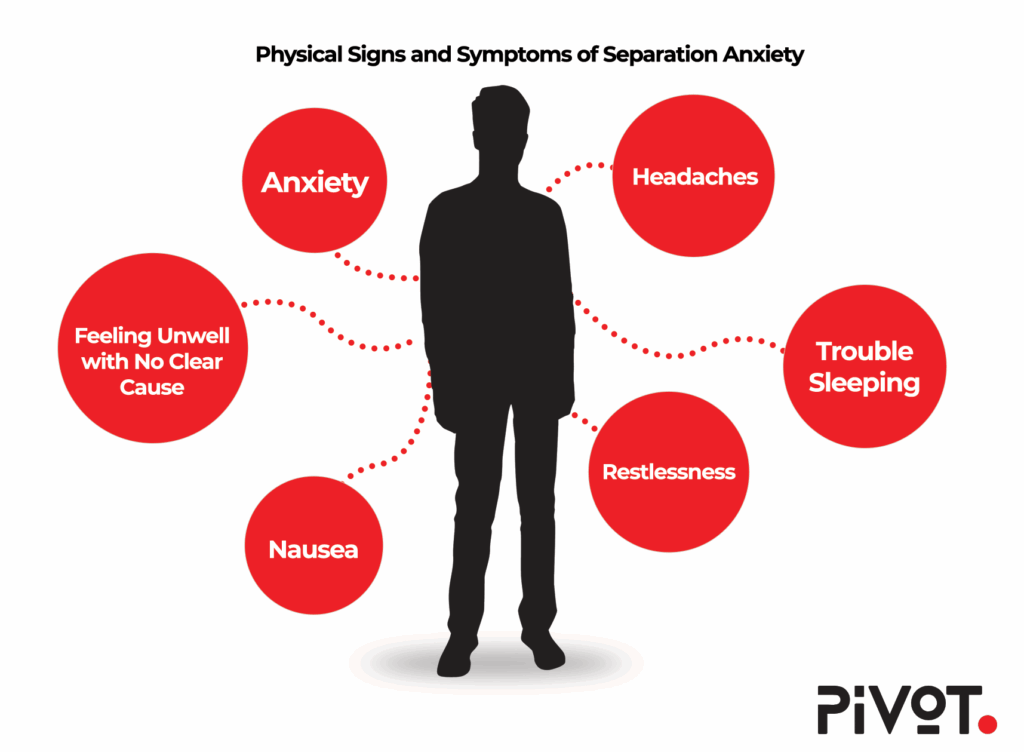
physical signs and symptoms of separation anxiety in relationships infographic

While nobody likes to be away from the people they love, there are cases when people feel irrational fear, panic, anxiety, and overall distress at the very thought of not being around their loved ones. Adults who suffer from separation anxiety disorder experience both emotional and physical symptoms that include negative thoughts and obsessive worrying.

Separation anxiety is not equally serious in all cases. It can be mild for some, while others may experience overwhelming levels of stress and anxiety, preventing them from the most basic functioning in their everyday lives. If you’ve been living with these feelings, you might not even realize something is wrong.

You may be suffering from separation anxiety in relationships if:

  • You feel unfounded and excessive worry and fear that people you love might disappear from your life, leave you, or pass away.
  • You refuse to be away from your loved ones and experience severe distress if you do.
  • You have difficulty sleeping when you’re away from your partner and feel extreme fear that something bad might happen to them.
  • You experience frequent depression or anxiety episodes or have panic attacks if separated from your loved one for a period of time. Just thinking about being away from them can trigger strong negative emotions.
  • Your daily commitments, work, parenting, self-care, etc., are compromised due to your fear of being away from loved ones, crippling your productivity and decision-making skills.

If this sounds like you, you aren’t alone, and you aren’t stuck. The first step in healing separation anxiety in relationships is understanding where it comes from. Relationship coaching can help you explore how your past relationships and environment made you feel unstable and fearful in your connections. This soul-searching work must be done in order to build healthier coping skills and heal your relationships.

What Can Cause Separation Anxiety in Relationships?

The causes of separation anxiety can be divided into several categories. Children of parents suffering from anxiety are more likely to experience it both as children and as grownups. Adults who are already diagnosed with generalized anxiety disorder can often experience separation anxiety as one of the many manifestations of this type of disorder. Environmental factors and various stressors experienced later in life can also play a role in developing separation anxiety.

Common Causes of Separation Anxiety in Adults
CodependencyCodependency in a romantic relationship and putting your partner’s needs above your own can create anxiety for both you and your partner.
History of rejectionA history of rejection or abandonment in previous relationships can cause you to constantly worry it will happen again.
Childhood attachment issuesChildhood neglect, abandonment, or other attachment issues can create deep-seated anxieties later in life.
Stressful environmentsAdverse environmental conditions or stressful changes are destabilizing and can create an atmosphere for anxiety to grow.
woman with separation anxiety in relationship, sitting down, pausing and breathing

What Are the Negative Effects of Separation Anxiety on Your Relationship?

Separation anxiety is most obvious in romantic relationships, which inherently makes people feel vulnerable and exposed. An anxious attachment style, which can develop during early childhood, can also amplify feelings of separation anxiety in romantic relationships. Being intimate with someone and opening up to them may also mean revisiting a lot of suppressed emotions, including those from early childhood. When people are unaware of the underlying causes of their separation anxiety issues, it can cause a wide range of problems in romantic relationships.

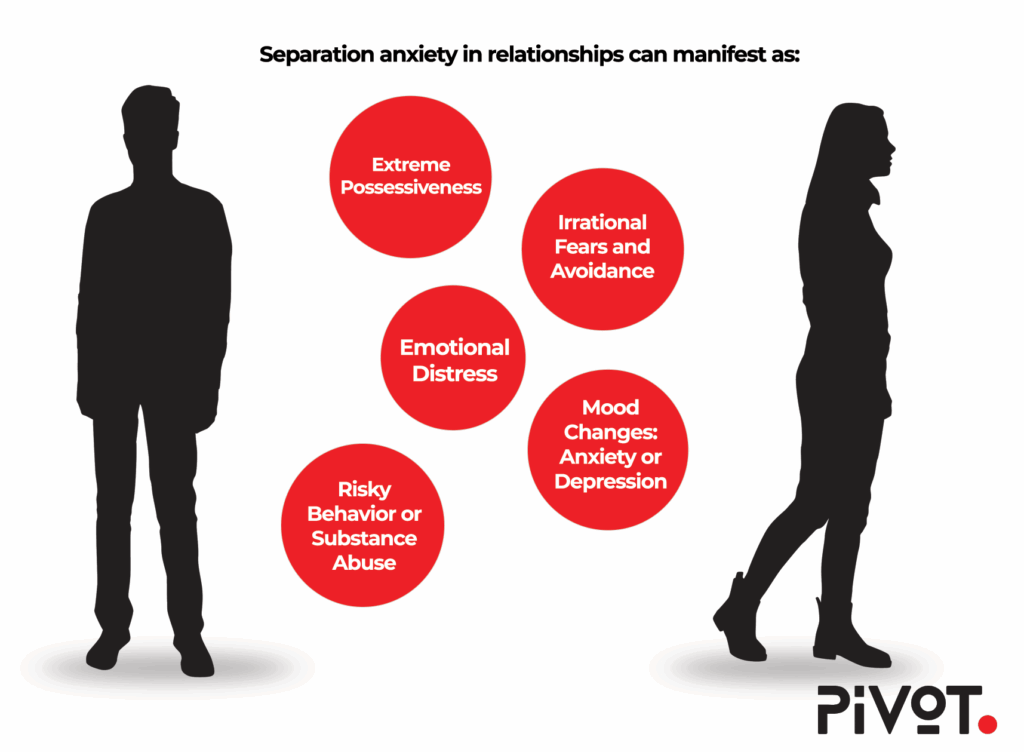
manifestation of separation anxiety in relationships infographic

There are, of course, cases when separation anxiety isn’t completely unfounded. People who enter romantic relationships with partners with avoidant attachment styles may be particularly susceptible to these issues.

Behaviors by love-avoidant people can make the situation worse, as those individuals crave independence and self-reliance. Love-avoidant individuals don’t feel comfortable relying on others or having others depend on them, so they tend to push their romantic partners away, easily triggering separation anxiety in the other partner.

Learn Coping Strategies for Relationship Separation Anxiety

If you recognize some of the behaviors and feelings in yourself or a partner, you might benefit from learning coping strategies to manage separation anxiety in relationships. While learning how to deal with such feelings requires some effort, professional guidance is available to help you make healthy attachments.

Managing separation anxiety involves developing healthy habits and activities that can alleviate feelings of anxiety when apart from your partner.

You can make the first step through PIVOT coaching sessions or retreats at the Glass House. Our experienced and caring relationship coaches can help you recognize and change unhealthy thoughts and behavior patterns, which can, in turn, make you better equipped to deal with your romantic relationship issues.

When you work with us, we can help you explore your and your partner’s attachment styles, communication patterns, and past traumas that are influencing your current relationship. We work with individuals and couples, both separately and together, to heal their connections and move forward in a healthier way.

Transform Your Relationships With PIVOT

PIVOT offers relationship coaching for individuals, duos, couples, and families, as well as business coaching and retreats. Reach out online or call us to begin the journey to a healthier, happier life where you no longer have separation anxiety in relationships.

pivot relationships company logo with tagline

The Best Marriage Intensives Can Turn Your Relationship Around

Let’s face it–every marriage could benefit from some time away from responsibilities, work, and kids to focus on communication and intimacy. But how many people make the time to put their relationship first? Where do you even find the time?

Whether you seek to deepen your connection or reignite the spark, investing time in your marriage is invaluable. If you’ve been struggling to communicate, dealing with fights that build into blowout yelling matches, or just feeling like the flame is missing and you aren’t on the same page, it may be time to work with a relationship coach. The best marriage intensives will pair you and your partner up with your own individual coach to work on issues separately. Your two coaches will come together with both of you to add an additional layer of support, which will allow you to accomplish more in a short period of time. 

PIVOT offers a unique marriage intensive that supports each of you as individuals and as a couple. Through the PIVOT Process, you will learn about yourself and each other, and gain the tools and strategies to strengthen and sustain your relationship. With this unparalleled level of support, you will learn to thrive, separately and together.

What Do the Best Marriage Intensives Offer?

While many couples opt to improve and enhance their marriage through weekly counseling sessions, the time constraints and inevitable distractions often limit progress. If you are looking for a deeper dive that brings rapid and sustainable change, a marriage intensive is the way to go.

The best marriage intensives give you insights into yourself, your partner, and your relationship and its dynamics. They also provide tools to facilitate communication, defuse conflict, and intensify intimacy.  This type of retreat provides the dedicated time and safe space to devote to your relationship and each other. 

The Best Marriage Intensives Use the PIVOT Process

PIVOT TechniqueBenefit
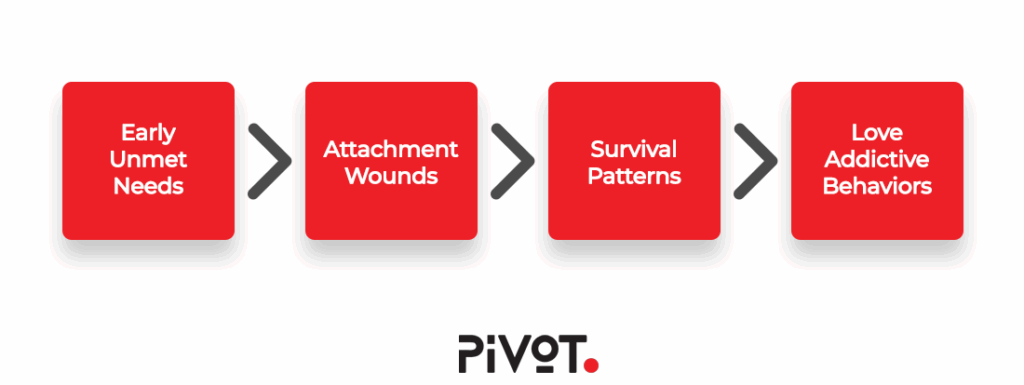
Developmental ApproachThe PIVOT Process is based on developmental psychology. It recognizes that problems in adult relationships often originate from childhood traumas and attachment wounds. Healing one’s inner child is essential for letting go of behaviors that sabotage one’s relationship.
Individual CoachingThroughout the PIVOT marriage intensive, each person has a coach who acts as a personal support system. Partners have the space to explore how their personal issues impact their marriage and what they can do about it.  This facilitates the deep dive necessary for each person to show up as their best self in their marriage.
Couples CoachingAfter working separately with their coaches, partners come together and work on their issues as a group of four. Coaches facilitate communication between the couple and can navigate conflict more easily in tandem with the other coach. Communication is augmented when each partner contributes openly to the conversation.
Experiential ExercisesActive learning helps participants to absorb and remember new strategies. Through exercises like role plays and simulations, couples try out structured ways to communicate and resolve conflict, thereby replacing the survival patterns that have tripped them up and gotten between them in the past.

Navigating Marital Challenges With PIVOT

While every couple will benefit from dedicating time and energy to their relationship, the best  marriage intensives can be especially helpful for those challenged by:

  • Physical or emotional distance
  • Challenging family situations (finances, aging parents, etc.)
  • Loss of attraction for your partner
  • Frequent disagreements 
  • Infidelity

The PIVOT Process was developed and tested in a clinical setting to support those facing a range of relationship issues. Since these problems often have their roots in childhood traumas and the early attachment wounds of one or both partners, it helps to work with an experienced relationship coach certified in this evidence-based process. They can help you identify the origins of conflict in your relationship and provide you with tools to promote healing so you can move forward more cohesively as a couple.

PIVOT Offers Multiple Levels of Support

Opportunity to focus and learn about: Benefits:
Yourself
  • Understand what you need and want from your relationship 
  • Understand your common attachment style
  • Learn to express yourself more effectively
  • Release sabotaging habits and patterns of behavior
Your Partner
  • Get to know your partner on a deeper level
  • Strengthen your connection
  • Restore your attraction and renew your passion
  • Learn to respect each other’s boundaries
Your Relationship
  • Strengthen the foundation of your marriage
  • Learn to manage conflict as a collaborative team
  • Practice new communication strategies
  • Rediscover intimacy
  • Find support for challenging family dynamics
the best marriage intensives elevate your relationship

What Sets the Best Marriage Intensives Apart?

While marriage intensives and retreats have some things in common, they also vary greatly based on geographic location, coaching process, and added features. PIVOT strives to meet your needs with features that include:

  • All-inclusive coaching, accommodations, and meals
  • A scenic and tranquil setting in Northern California
  • Evidence-based and clinically tested processes
  • A separate coach/facilitator carefully selected for you and your partner
  • A customized experience tailored to your marriage’s needs
  • The option to bring the intensive to your location

The best marriage intensives are an investment in yourself, your partner, your relationship, and your future. Offering features such as individual and couple coaching, and psychoeducational and experiential exercises, PIVOT provides ready-to-use tools to facilitate open and honest communication. Participation will nurture your sense of self, strengthen your bond, and transform your marriage.

The closeness you feel after completing a marriage intensive with PIVOT-certified relationship coaches will make you wish you had done it sooner. Your time away together will allow you to focus on the two of you in a safe, dedicated space. You will carry the benefits and your newfound tools with you as you return to real life with the relationship you always longed for.

PIVOT Offers the Best Marriage Intensives in Northern California 

PIVOT offers relationship coaching for individuals, couples, and families as well as the best marriage intensives in Northern California. Reach out today at 1-855-452-0707 to start working with us towards a closer, more fulfilling marriage.

Relationship Passivity: How to Identify It & Become More Active?

A fulfilling romantic relationship is a meeting of equals. Both partners’ opinions and feelings are acknowledged, and both of their needs are taken care of. They thrive both individually and as a couple, allowing each other space for independence and growth -separately and together!  

However, the power dynamic within some relationships is not 50/50. It’s common for one person to have more drive and initiative while the other one tends to just go along with everything. While this may seem like a harmonious arrangement, it can cause problems down the road. The partners may hold this difference against each other and grow resentful after a while.

Knowing how to identify and overcome passive behavior may be crucial to the success of your relationship. Keep reading to find out how to deal with this common power imbalance. If you’d like to learn how to spot passivity in a relationship and discover ways to stop behaving passively, you can also do so using relationship intimacy coaching exercises. 

What Does Being Passive In A Relationship Mean?

Many relationships have a skewed balance of power. Typically, one partner acts responsibly and fixes problems proactively while the other one is laidback and indecisive. If an issue crops up, the active partner is on it immediately. The passive partner takes the backseat, waiting for the other person’s cues. For example, the passive partner may not even notice a light bulb that’s burned out whereas the active partner will spot it and work on the problem straight away. 

This leader-follower dynamic may work for a while. In the beginning of the relationship, this difference may feel refreshing to both people. The passive partner may admire the other one’s problem-solving skills, decisiveness, and resourcefulness. The active partner may like the other person’s laidback and carefree attitude. However, this can also become the main point of contention as time goes by. 

Often, this dynamic mirrors what the individual learned as a child and adolescent.  Were they parentified too young and have to take charge? Were they controlled by a helicopter parent that did everything for them?  Understanding their developmental psychology together as a couple can really help with understanding why their partner reacts the way they do. These behaviors often have deep roots, stemming from early childhood experiences with controlling or conditional parenting.

What Are The Signs Of Passive Behavior?

A passive partner in relationship typically minimizes problems and chooses to deal with them later. This person rarely takes charge or makes vital decisions independently. They prefer relying on the active partner to solve everyday problems, like booking their daughter’s dentist’s appointment or making a grocery list. They may also seek their partner’s approval and readily go along with anything they want and say. This reliance on the active partner can also negatively impact the passive partner’s self esteem, making them feel inferior and dependent.

You may have (or be) a passive partner if you keep finding yourself in a conversation about responsibility. If one partner in your relationship keeps complaining about having to be in charge and do everything, the chances are that the other person exhibits passivity. 

How Do You Deal with A Passive Partner?

Putting up with this disproportionate division of responsibility is difficult to deal with for both individuals and can even lead to the death of the relationship. If you’re the active partner, you probably feel exhausted, used, and exasperated. This may make you critical and controlling of the other person. In turn, they can feel unfairly victimized and infantilized.

Conversations about passivity often turn into fights about who is right and who does more, and they usually do more harm than good. You may be pushing your partner to have more initiative although they may get defensive and rebuff your complaints. They may also feel like you’re being condescending and unappreciative, which can also lead to avoid conflict rather than address the issue directly. This is why approaching these conversations from a place of love and respect is very important.

Talking about the problem is the first step to solving it, although it may be best to tread carefully. It’s advisable to avoid criticizing the person too harshly and calling them lazy or careless. It’s most effective if you present the matter with a clear head, explain yourself directly and openly, and work on a strategy together.

How Do I Stop Being Passive In A Relationship?

An effective strategy for overcoming these differences and aligning with your partner is to communicate effectively and come together to create a solution that works for both parties. This will probably require both partners to change and compromise. In some cases, it can be beneficial to seek support from friends or professionals to navigate these changes effectively. And, here are some things to try:

Understand what makes you act the way you do

Understanding yourself is essential to functioning well with someone else. An active partner tends to deal with stress by being hypervigilant, anxious, and controlling, while the passive partner may fall on the other end of the stress coping spectrum, using escapism and avoidance. While these coping strategies may solve problems, they still take a toll on the person’s well-being. This behavior causes friction in the relationship and gets nothing done. Both people would benefit from acknowledging their ineffective patterns and working through them.

Go against your unhealthy patterns

To have a healthier and more satisfying relationship, one person needs to learn how to let go while the other one needs to adopt a more proactive approach to life. The passive person could try to hear their partner out when they’re in worry mode and acknowledge their concerns. They can make progress by thinking of solutions to the problem at hand instead of dismissing it. Meanwhile, the active individual could work on resisting their controlling urges. Professional relationship coaching can be very helpful in making these different individuals see eye to eye. Providing positive feedback when the passive partner takes initiative can also foster empowerment and self-respect.

Overcome Relationship Passivity & Emotional Intimacy Issues

If you’re unsure how to approach the issue of passivity in your relationship, PIVOT has the answer for you. With our expertise and compassion-based couples workshops at the our Glass House retreat, you will learn how to have empathy and sympathy in an objective way, and ultimately communicate with your partner more openly, share your fears and concerns, and work through them as a unit. We specialize in helping couples turn regular 3 day fights into 15 minute conversations.

pivot company logo with tagline

Our extensive curriculum and individual coaching sessions can also help you find peace and reconnect with every part of your inner self. Our experienced relationship advocates will be there to educate you on healthy behavioral patterns and teach you helpful techniques to help you heal and grow.

Reach out to us today to take part in a rewarding and empowering journey toward self-actualization. We’ll welcome you with open arms.

Complacency in Relationships: Signs and How to Avoid It

You’re in a relationship. You’re feeling good about it. You love your partner. Your partner loves you back. You know each other well. You talk, your partner listens. Your partner talks, you listen back. You’re cozy. And it’s easy. And there are no challenges or outbursts. There’s love. Or at least you think and know there is. You’re just not feeling it in the same way you used to.

It’s almost as if love has been replaced with comfort, convenience, and security. You feel pleasant, however not great. There’s a fleeting sense, a brief moment when you feel something’s off and then it passes, and you’re back to the warm bliss of the familiar. You block off potential problems in your relationship and postpone the need to improve intimacy in a relationship. 

And you feel good again ignoring that voice in the back of your mind that craves a bit more fireworks. You’re taking your love life for granted and you seem to be enjoying it. However, falling prey to this kind of complacency in a relationship can end up being the very bane that brings havoc where there was harmony. Putting a stop to it is an important mission that will breathe new life into your relationship. How to do it? Begin with the basics and actively work to avoid complacency.

What Is Relationship Complacency?

What Is Relationship Complacency?

There’s a lot we hear about relationships and the different stages, issues, and problems. We all know about the honeymoon period, how you can make it last, and what to do when it inevitably ends. Or the seven-year itch that can occur in even the most loving of relationships and marriages. However, what about complacency?

Is complacency not a problem? Does it really affect relationships negatively and can being comfortable and complacent really cause such harm to both you and your relationship?

It is, especially because complacency is often mistaken for comfort. Being comfortable with your significant other is great. Being complacent is not that great. Complacency means gradually slipping into a false and often toxic comfort zone that prevents both you and your partner from enhancing your relationship, improving your communication, and taking each other for granted. 

Complacency comes in various forms, as do relationships. All couples are different and all couples that experience relationship complacency experience it in different ways. However, there’s one common line that defines complacency – putting less and less effort into your relationship and paying less and less attention to each other. 

What Are The Signs Of Complacency In A Relationship?

Still, complacency seems like simply a relationship that’s entered a bit of a rut. That’s easy enough to resolve, isn’t it? Well, yes and no. A rut requires a bit of action, adding a bit of dynamicity into your daily life, and stepping outside your comfort zone to engage in activities both you and your partner will enjoy. 

Complacency is more serious than rut. It breeds passivity and can provoke a wide range of increasingly negative feelings and harmful relationship traits that can lead to more significant problems, including a diminished sense of connection and excitement between partners.

This makes it really important to recognize the signs of complacency on time. You need to react before it roots itself within your relationship and starts causing problems that will only get tougher and tougher to deal with down the line. Some of the most common telltale signs of relationship complacency are: 

How Do You Overcome Relationship Complacency?
  • Feelings of restlessness and boredom in the relationship and toward your partner
  • Lack of attention between you and your partner
  • Either experiencing or handing out criticism on a regular basis
  • Neglecting your own wellbeing and self-care
  • Experiencing a constant decline in your intimate activities
  • Fantasizing about others
  • Resorting to routine i-love-yous
  • Not organizing date nights like before
  • You and your partner not sharing individual experiences
  • You feel more and more distant from your partner
  • There is a significant lack of communication

How Do You Overcome Relationship Complacency?

It’s easy to see why relationship complacency is a lot more serious than it seems and than people give it credit. In fact, complacency can often serve as the building block for numerous issues down the line if you and your partner decide not to work on it together. However, working on it can often be difficult and demanding. 

And that’s nothing to be ashamed of. Just because your relationship requires work doesn’t mean there’s no love, affection, care, and dedication. It takes guts and strength to recognize that your relationship has become complacent and to talk with your partner about it. From there, you can try to tackle that complacency by doing the following: 

  • Adopt a new mindset that realizes and recognizes that relationships require active effort.
  • Compliment and take notice of each other to foster a deeper connection.
  • Set ample alone time for just the two of you.
  • Try to shake up your daily routine.
  • Engage in honest conversations with yourself and with your partner.
  • Become more curious about your partner.
  • Work on your emotions and physical intimacy.
  • Set clear goals for your relationship. 
  • Explore new activities you can do together.
  • Go your separate ways for a day and then tell each other all about it. 
  • Create a love map of your relationship that explains your dreams, hobbies, fears, and other traits you and your partner find important. 
  • Practice empathy together with your partner. 
  • Hold hands and hug each other. 
  • Try to put your phones away and just enjoy each other’s company. 

PIVOT Helps Improve Emotional and Physical Intimacy In Your Relationship By Resolving Intimacy Problems & Complacency

Falling into the trap of relationship complacency is easy and more common than you think. However, detecting the reasons behind your complacent relation with your partner and working to resolve your issues can be difficult and can lead you to question how strong you are and cause unwanted pressure within your relationship.

pivot company logo with tagline

We’re not gonna lie – dealing with any problem within your relationship, even one as seemingly small and easy-to-resolve as complacency is tough. It’s hard for you and your partner to look yourselves in the eye, admit problems, and start taking them head on. However, with healthy communication and real effort, everything’s manageable. At PIVOT, we recognize how challenging it can be for individuals and couples to end a complacent period, and we’re committed to helping you foster a relationship that thrives on connection and shared growth. That is why we’ve envisioned both specialized individual workshops for invigorating your life and couple workshops for helping you find the spark in your relationship again. Reach out to us today!

Emotional Detachment In Marriage: What Causes It & How To Overcome It

Most people who’ve been in a long-term, committed relationship can recall times when it felt like you were spending all of your time together. You will also likely remember that there were times when you started feeling more distant or drifted away from your partner. This can be a sign that you’re starting to grow apart. However, it’s not necessarily a bad sign. It might be a result of changes in your career, complications with family and/or friends, a consequence of boredom with everyday routines etc. 

Many people struggle with understanding what to do with this felt sense of boredom. Rather than blaming yourself or each other, you may try to understand the nature of your unexpected emotional disconnection. Rather than let it turn into emotional neglect that can lead to challenges, you can seek professional help and learn how to improve intimacy in your relationship.

What Does It Mean To Be Emotionally Detached?

If you feel emotionally detached, it means that you feel disengaged or disconnected from the feelings of people around you. 

It might manifest itself as the absence of motivation to be involved in the emotional lives of other people, or a lack of capacity for it. It can be a reaction to a stressful period, which is often temporary, or it can be a trait of your attachment style, especially if it was developed as a way to cope with traumatic events in life

How Do You Get Emotional Detachment?

If you had traumatic experiences as a child, detaching from the feelings of others can be a means to survive and keep negative emotions at bay. There are other scenarios that can lead to emotional detachment as well:

  • Experiences of significant loss, such as a separation from a primary caregiver, parental divorce, or death of a parent or sibling.
  • Having traumatic experiences growing up, including natural disasters, immigration to a different country, and going through life-threatening situations.
  • Spending childhood in foster care or challenged adoption home.
  • Experiences of emotional and/or physical abuse.
  • Experiences of physical and/or emotional neglect.

Remember, not all people who have survived emotional trauma in childhood or adolescence develop emotional detachment or other avoidant behavior. Some people will try to trauma bond with their romantic partners, idealizing them or reliving their trauma, and many will be able to recover and start healthy relationships. 

What Does It Mean To Be Emotionally Detached

How Do You Know If You Are Emotionally Detached In Your Marriage? 

Here are some of the possible signs of emotional detachment in a relationship:

  • You take each other for granted.
  • You have stopped listening closely and started shifting focus from your relationship to other interests when the focus needs to be on your relationship.
  • You no longer respect your mutual rituals, i.e. you don’t have breakfast, dinner, or go to bed at the same time.
  • When on a business trip or away, you only communicate routinely and don’t really want to call each other to check in.
  • You have a fear of engulfment i.e. loss of boundaries with your spouse, which wasn’t the case in the past.
  • Getting lost in your job and career role, using your work responsibilities as an excuse not to spend time with your significant other.
  • You have trouble finding ways to balance your personal space and intimacy.
  • You seek reassurance and resources for your emotional needs from other people. This doesn’t have to take the form of adultery or flirtation. However, it can take the form of emotional infidelity.

What Do You Do When You Feel Disconnected From Your Partner?

If you want your relationship to be healthy, you will want to resolve it. You can start by looking at events that jeopardized your connection. You can also look up similarities with your past relationships, and see whether you’ve ever withdrawn the way you do right now. And, if you have no history of being emotionally detached, you might just need some personal space and your detachment is just temporary. 

It’s possible to reconnect by working on your relationship together. You may join a relationship workshop to help you pinpoint the causes of your emotional distance and work on bonding with each other again.

How Do I Emotionally Reconnect With My Spouse?

First, you may check whether the nature of your disconnection or detachment is traumatic or situational. Track down the source by taking your time and reflecting on the causes. 

  1. Get To Know Yourself Better

Try to learn more about your needs and past experiences that you might’ve hidden deep. A relationship coach may help you discover your common relational patterns and attachment style.  Then you can work through the wounds that keep you from having a successful relationship.

  1. Give Yourself Time

Be patient and gentle with yourself, so that you can be fair and caring for your spouse and your relationship. Sometimes, it will take you more than a short period of time to gain understanding and find a way to not avoid emotional intimacy.  

  1. Recall Important Milestones Of Your Relationship

Reflect on the good times and the bad times. It may put your whole relationship into perspective and give you valuable insights.

  1. Try To Get Into Their Shoes 

Try to see your relationship from your partner’s perspective. Talk to them to understand their position better and understand their wants and needs.  Then share yours and find common ground to rebuild your relationship.

  1. Make Efforts To Rekindle Your Connection

You could do this with small gestures or by introducing the spirit of excitement and surprise. It’s a good idea to be creative and show that you care. Rebuilding your relationship on honesty, trust, and self-awareness is more likely to be successful, and a little effort often goes a long way.

How Do You Get Emotional Detachment

How Can My Relationship Benefit From Experience-Based Intimacy Coaching? 

Whether you’re looking for a way to restore the warmth and passion in your long-term relationship or to work on your own patterns of attachment, you can count on our relationship advocates to PIVOT from your old ways and learn something new. 

We offer couple-based workshops that can help you improve your intimacy and mutual understanding, as well as private coaching sessions for individuals

You can pick the type of coaching you feel most comfortable with, and steadily. Give us a call today and embark on a journey toward a healthy emotional life. 

Repression: What It Is & How To Cope With Repressed Emotions

Defense mechanisms are unconscious tools that people use to escape intensely unpleasant emotions, like anger, jealousy, guilt, and grief. Repression is one of these strategies. Although it is a normal part of human functioning and can produce desirable effects in the short term, repression typically isn’t beneficial in the long run. It can actually lead to an increase in discomfort and anxiety over a longer period of time.

Getting to know more about these unhealthy coping mechanisms is the best way to overcome them and turn to more positive strategies for overcoming psychological distress. Then you’ll also be able to spot these detrimental behaviors in other people. For example, you’ll know how to recognize repressed emotions and love avoidant signs in your romantic partner, and take steps to mend your relationship.

Keep reading to gain a deeper understanding of repressed memories and emotions and how they can affect a relationship. Find out the ways to overcome these difficulties or support your partner as they’re working through them.

What Does Repression Mean In Psychology?

What's The Difference Between Repression And Suppression

Repression is a defense mechanism in which a person distances themselves from negative thoughts and feelings by barring them from their consciousness. Essentially, it’s a psychological term for “sweeping things under the rug”. It happens without trying or realizing. 

A person may repress the memories of certain traumatic events or some upsetting feelings, so that they’re completely unaware of their existence. Unlike with sublimation, where negative and inappropriate thoughts are channeled into a positive, productive behavior, repressed thoughts and emotions stay hidden under the surface. However, although they remain concealed from the person, they can still have a powerful damaging impact on all aspects of their life, including relationships. 

What’s The Difference Between Repression And Suppression?

Repression is often mistaken for suppression and they’re sometimes used interchangeably in everyday speech. However, in psychology, these two concepts differ. Both are considered defense mechanisms, yet they work differently. While they both involve separating oneself from inappropriate and unacceptable impulses, repression works without a conscious effort while suppression is voluntary. 

Both mechanisms can be set off as a result of a traumatic event. With repression, a person who was abused as a child or had a serious car accident may have no actual recollection of these events or their memories may be blurred and altered. However, they can still have a detrimental influence on their well-being, which may manifest itself as insomnia, mood swings, depression, and other physical and psychological disturbances. If a child is bitten by a dog at an early age, for example, they could repress this situation altogether and may project these feelings of intense fear onto all dogs and other animals.

During suppression, a person tries to distance themselves from a hurtful emotion or disturbing thoughts on purpose. For example, people who experience obsessive thoughts may try to suppress these impulses deliberately to keep themselves from engaging in obsessive behaviors. Or, a person who’s ashamed of something they’ve said or done may purposely avoid thinking about it.

What Can Trigger Repressed Memories?

What Can Trigger Repressed Memories

A repressed memory may sometimes be triggered by a stimulus and cause the person to experience a range of physical and psychological difficulties. Triggers can widely vary. They can be anything that the person associated with the traumatic event from their past, including various sensations, like smells, sounds, or sights. 

The reaction to the trigger is also individual. For example, it can set off a panic attack, a violent outburst, or severe generalized anxiety. It is helpful for people to recognize their triggers and learn how to retrain themselves to gain control over them, which they can do with adequate psychological support.

How Do I Deal With an Emotionally Repressed Partner?

Emotional repression can take a toll on your romantic relationships. It can result in relationship avoidance, where you are afraid to open up and commit to your partner. If your significant other has repressed feelings, they may have trouble talking about their emotions or realizing what emotion governs their behavior at a given time. It’s hard seeing a partner suffering without being able to help them. 

Here are a few things that can be helpful:

  • Show your appreciation. People who are emotionally repressed have sometimes experienced a lack of validation from loved ones.
  • Let them know that you’re there for them. Take steps to help them feel comfortable talking to you about their traumatic experiences. The first step to encouraging them to work on healing their childhood wounds is to talk about them.
  • Assure them they’re safe. They will begin to share more once they are absolutely certain that they can trust you not to hurt them.
  • Help them seek professional support. A therapist or a relationship coach can assist them in overcoming their love avoidant behavior. 
  • Be upfront about your needs. If you need more openness and affection in your relationship, work out a way to bridge these differences so you’re both taken care of.
  • Know that their reactions are sometimes a reflection of their repression. Learn to differentiate between the results of emotional trauma and the true expressions of their personality and feelings.
  • Keep in mind that change takes time. The path toward personal growth is steep and winding, so be prepared for a bumpy ride and potential setbacks along the way.

How Do You Release Repressed Emotions?

If you believe that you have repressed emotions to work on and that they’re affecting your relationships, you can seek the help of an understanding relationship coach. During coaching sessions, you’ll acquire skills that will help you understand your feelings better, make you more comfortable expressing your feelings, and teach you how to regulate them more effectively.

Overcome Relationship Avoidance & Repressed Emotions With Reliable Coaching

Here at PIVOT, you can work through your repressed emotions, learn how to let go of them, and replace unhealthy defense strategies with more beneficial ones. We’ll help you delve deeper into how you’re used to coping with distressing thoughts and feelings and guide you toward positive change. If you’d like to learn how to actualize your potential and overcome the challenges in your relationships, you can do so under the wing of one of our pleasant and understanding coaches. Take one of our individual, couples, or family coaching opportunities or attend our useful relationship workshop to unlock your repressed emotions and lead a more rewarding and enjoyable life.