

What Is Avoidance / Ambivalence Attachment?

For some individuals, thinking about being in a relationship can activate feelings of wanting to run away. Why? Because they feel that the needs of a partner, family member, or employer are overwhelming.

Attachment theory explains the development of attachment styles, which are formed through early interactions with caregivers. Unfortunately, many individuals find themselves attracted to avoidant or ambivalent partners. These attachment styles can significantly influence adult relationships, often leading to a series of unhealthy patterns which cause a great deal of pain for both sides in the relationship. If this is the case with you and your partner, consider love avoidance coaching or intensive workshops which can give you the tools and resources you need to heal your attachment wounds.

Read on to learn more about love avoidance and ambivalence.

[template_part_attachment_quiz]

What Is Avoidant Attachment?

Avoidant attachment is the inability and fear to show love. Individuals will carefully guard themselves when in relationships and avoid real intimacy… to protect themselves from rejection, loss and pain. Often they are not even aware of the behavior and it can be misunderstood as selfishness.

Unfortunately, denial and avoidance become habits, which keeps the individual from being seen, feeling connected and loved.

Paradoxically, the individual will often want more but will go outside the relationship to get what they want, because it feels safer.
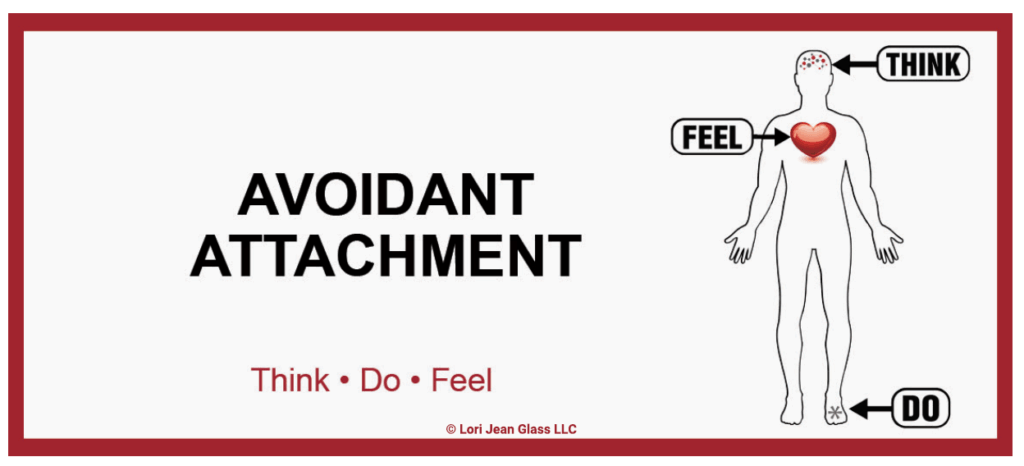
infographic about avoidant attachment - think first, then do, then feel

The avoidant thinks first, then takes action, and then sometimes processes their feelings after the action. What happens next is sometimes regret, doubt, uncertainty, and/or confusion.

People with avoidance issues have difficulty trusting others and will distance themselves if a relationship feels too close. Experiences in early childhood are usually the cause of this, and they use avoidance to try to feel safe within an intimate relationship.

How Do You Know If You Have an Avoidant Attachment Style?

Do you think you or your partner have avoidance issues? That may be the case if you notice that you tend to be uncomfortable with intimacy in your relationship and have a way of escaping commitment when you start to feel stifled or suffocated. 

If you worry your partner is avoidant, you may want to look for signs such as: 

  • Not returning your texts or calls
  • Idealizing a past relationship
  • Sending mixed signals
  • Keeping secrets 
  • Childish and sullen behavior
  • Showing mistrust 
  • Escaping commitment 

Of course, these are just some of the signs your partner may exhibit in your relationship. However, if you feel like most of these signs ring true, you may want to consider professional couple counseling or relationship therapy workshops. 

Do Avoidants Fall In Love?

Despite the name, love avoidants actually crave love and affection, just like everyone else. However, they often exhibit insecure attachment styles due to their childhood wounds, making it more difficult for them to face disappointment and betrayal than other people. As a result, they tend to guard their feelings and do all they can to avoid being hurt in their relationships. They are not running away from love, they are running away from pain. In contrast, individuals with secure attachment styles are more likely to form healthy relationships and handle emotional challenges effectively.

Why Are Love Avoidants Attracted to Love Addicts?

Both love addicts and love avoidants often carry deeply ingrained fears and insecurities that stem from their childhood. On one hand, addicts crave affection and love that they rarely received from their parent or caregiver. Love avoidants, on the other hand, typically try to run from intimacy to avoid getting engulfed and hurt once again. 

While the relationship may work initially, it is bound to come with its own set of challenges. As the love addict showers the avoidant with love and affection, the avoidant will inevitably start to pull away. The distancing of the avoidant will lead the addict to seek even more reassurance and affection as proof of the avoidant’s love. This cycle often repeats itself. This is what many refer to as a love addicted tango.

How Do You Deal With A Love Avoidant?

Being in a relationship with an avoidant partner can be extremely challenging, especially for a love addict. But despite the challenges, it is possible to create a deep connection with an avoidant, but only if they are willing to put in some effort, too. Here’s how you can improve your relationship with an avoidant partner: 

  • Be patient and show your partner that they can trust you 
  • Give your partner some space instead of chasing them 
  • Keep in mind that their love avoidance is not your fault 
  • Be understanding and dependable without overwhelming them
  • Learn the differences between the wants and needs for the relationship between you and your partner 
  • Recognize your own unhealthy survival patterns 
  • Set healthy boundaries 
  • Don’t neglect your own needs 

What Is Ambivalent Attachment?

Another way attachment shows up is if the individual is unavailable for intimacy. This means they are caught up in feeling anxious and also at times avoidant. This is the type of person that communicates “come here – go away”. This is known as being Ambivalent.
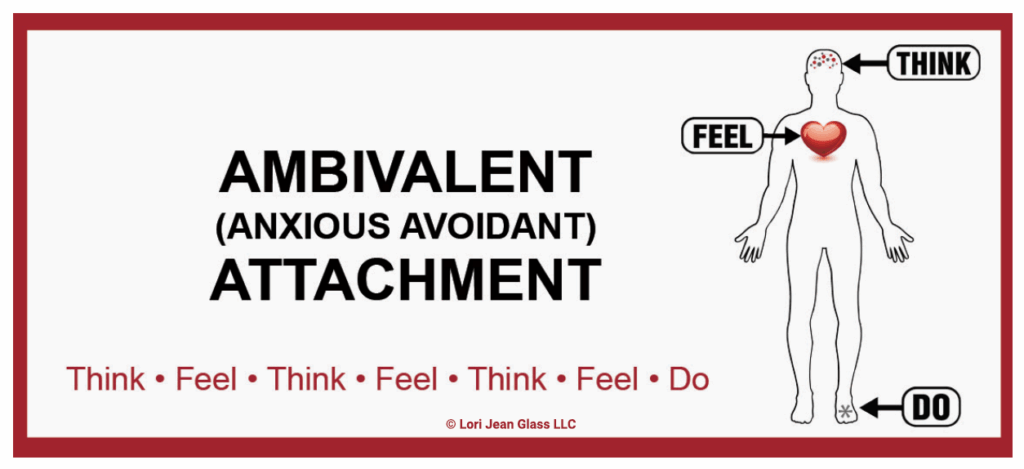
infographic about ambivalent attachment aka anxious avoidant attachment - frozen with thoughts and feelings, little action

The ambivalent (or anxious avoidant) gets stuck in a prolonged cycle of thoughts and feelings, with little to no action. Freezing is the familiarity, even if it is painful, confusing, or exhausting.

The coping strategies that are avoidant or ambivalent which people use relate to creating an intensity in other activities outside the relationship, such as non-intimate sex, work, shopping, drugs and alcohol. 

Among all of the attachment styles, ambivalent attachment seems to be the most chaotic. This is because ambivalent attachment tends to come from a childhood in which the parent or caregiver was inconsistent in providing love and affection. In another example- divorce between parents can create a separation and level of confusion for a child or adolescent. Imagine either parent sending completely different messages or signals to their children during their formative years and through their adolescence that conflict or are misaligned.

How Do You Know If You Have an Ambivalent Attachment Style?

Being ambivalent in your relationships or living with an ambivalent partner can be exhausting. If you’re worried that your partner has an ambivalent attachment style, look for the following traits: 

  • Is your partner constantly critical or picky? 
  • Do they have a history of short relationships? 
  • Are they confused about what they want from the relationship? 
  • Do they always seem distant or busy? 
  • Are their actions unpredictable? 
  • Are they hesitant to make long-term plans? 

If you never feel sure of what your partner feels or thinks, it’s likely that you feel lost and confused about the nature of your relationship. If that’s the case, it would probably be a good idea to seek expert help if you want to salvage the relationship and improve your mental health. 

The Glass House Retreat helps avoidant and ambivalent individuals find their voice and use it. 

When the avoidant or ambivalent behavior is defined and understood, it becomes a starting point to treat the underlying causes that create love avoidance. If this isn’t treated, then it often leads to depression.

When an individual has difficulty deciding whether to leave a relationship, this indecisiveness can lead to a combination of feeling anxious and depressed. 

Why Is Attachment Important To Physical And Mental Health?

Avoidant and ambivalent attachment behaviors can significantly decrease the quality of your life, especially when it comes to your interpersonal relationships. In fact, the style of our attachment is a key factor in our physical and mental health. Here’s how: 

  • The relationship with our caregivers will shape our intimate relationships and influence our adult attachment styles 
  • Unhealthy attachment can result in difficulties with understanding our emotions.
  • In turn, we may struggle with relating to the emotions of other people.
  • Without healthy connections with others, we may struggle with anxiety and depression.
  • Our attachment style can make it hard to bounce back from disappointment and failure. 

These attachment styles can affect adult relationships by influencing emotional behavior and partner dynamics. As you can see, your attachment style is a key factor in determining your personal relationships. Because of this, working on your attachment can be incredibly useful for improving your intimate relationships and overall wellbeing.

What Causes Love Avoidance and Ambivalence?

Individuals need love and connection with others. However, if you have suffered from feelings of abandonment or loss as a child, then you are likely to develop an insecure attachment style, which can lead to difficulty forming healthy attachments in adulthood, which can lead to avoidance or ambivalence.

Avoidance or ambivalence can also occur from experiencing abuse or neglect as a child from parents, siblings, other family members, teachers, coaches, bullies and friends.

If you’re wondering if you or a loved one has Avoidance behaviors, here are the most common signs and characteristics to look for.

Most Common Characteristics And Signs Of Avoidant Attachment

Individuals with an avoidant attachment style tend to exhibit a number of characteristic behaviors, including: 

  • Avoid intimacy in the relationship by creating an intensity in other activities outside the relationship
  • Craving independence at all costs
  • Emotional withdrawal and bottling up emotions
  • Avoid being known in the relationship
  • Distance themselves from intimate contact to keep from feeling engulfed
  • Over-controlling parenting when young
  • Secretive behavior – hiding feelings
  • Need to be seen and adored and then escape
  • Refusal to acknowledge the existence of a problem
  • Tolerance for high-risk behavior
  • Denial that there is a problem 

Most Common Characteristics And Signs Of Ambivalent Attachment

If you’re wondering if you or a loved one has Ambivalent behaviors, here are the most common signs and characteristics to look for:

  • They let other things outside of the relationship get in the way, i.e., hobbies, work, friends, lovers, addictions—anything.
  • Typically, they had one anxious and one avoidant parent attachment style
  • They have a “come here, go away” relational pattern
  • Crave love and fear it
  • Avoid intimacy by obsessing about love through romantic fantasies about unavailable people
  • They sexualize relationships such that emotional intimacy is non-existent and then become addicted to the sex or the relationship—often both.
  • They become addicted through romantic affairs rather than committed relationships
  • They struggle to open to a deeper level of emotional intimacy, and yet they are unable to let go of the relationship.

Can Avoidance or Ambivalence Be Treated?

YES!

The first step starts with being aware of and recognizing the symptoms. It is about healing yourself and being committed to being able to attach securely by knowing what you want and need in a relationship based on your personal storyline and background.

The process includes dealing with feelings and healing from past wounds. Healing allows you to reconnect to yourself with self-compassion and self-love. 

We recommend that you seek support from professionals and talk about the pain that’s inside of you. 

Remember, you are worthy of happiness and love and a healthy relationship. You can have relational freedom.

How can you deal with ambivalent or avoidant attachment?

ambivalent behavior

Coping with their attachment style is a long and stressful process for most people. This is because we’re often unaware of the exact issues that stem from our relationship with our caregiver in our early childhood and finding out exactly how much it has affected us can be both eye-opening and terrifying. 

The first step to overcoming your insecure attachment is to get acquainted with your past. Understanding exactly how you became the person you are now can help you accept and reconcile with your childhood experiences. 

This is best done through professional therapy and attending different workshops and programs designed to help you improve your relationships and your overall well being. But if you want to take some steps on your own, here’s what you should do: 

  • Start by identifying your emotions and expressing your needs without fear. 
  • Strive to be as authentic in your communication as possible. 
  • Combat your shame and work on your self-esteem. 
  • Try not to criticize yourself and accept your flaws. 
  • Work on compromising and seeing your partner’s perspective. 

Of course, these are just some of the steps you can take to start on your path to recovery. In addition to these general coping techniques, you should also seek professional support if you want to improve your relationships and the quality of your life.

How To Overcome Insecure Attachment: Our Love Avoidance Intensive Workshops Can Help!

We provide support and healing for these individuals by providing a personal PIVOT coach or coming to The Glass House and taking a 5-day deep dive into the PIVOT process. We provide defining attachment styles, one on one sessions, group process and experiential therapies to encourage individuals to be seen, respected, and understood.

pivot company logo with tagline

In addition, we offer intensive programs designed to repair and restore relational challenges. Learn more about the PIVOT process and our programs. We’re here to help.


Attachment Style Quiz

Have you ever wondered why you fall head over heels for a new partner, go all-in on new friendships, or are a bit more guarded in how you approach these relationships? It’s all about your relationship attachment style! Take our fun, insightful, quick, 5-minute  attachment style quiz to discover whether you have a secure, anxious, avoidant, or ambivalent style of attachment.

Attachment Style Quiz

Take this 5-minute attachment style quiz and then come back here to find out what your results mean!

[template_part_attachment_quiz]

While You Wait For Your Results

After you’ve submitted your quiz and you’re waiting for those results to pop up in your inbox, check out these pages to learn more about the different ways people connect and how to develop the healthiest attachments.

Interpreting Your Attachment Style Results

Based on your quiz results, you may primarily identify as having a secure, anxious, avoidant, or ambivalent attachment style. Depending on who you’re with, you may attach using different styles. One attachment style isn’t necessarily better than another, However, knowing what attachment style you frequently use will help you understand yourself better, and you can begin to work on learning how to attach to others in a healthier way.

What Your Attachment Style Means
Your Style What It Means What It Means
Secure
  • You are confident and comfortable in your relationships.
  • You trust yourself.
  • You communicate openly.
  • You have appropriate boundaries.
  • You maintain a healthy balance of independence and closeness.
  • Love feels safe and fulfilling!
  • Connect with other attachment styles
  • Set healthy boundaries
  • Remain healthy when you’re surrounded by challenging people
Anxious
  • You’re often worried about your relationships.
  • You crave constant reassurance.
  • You might fear abandonment.
  • You overthink your partner’s actions (leading to heightened emotional intensity).
  • It can be emotionally draining for others when your anxiety gets in the way.
  • Learn to trust yourself
  • Learn to think before you react
  • Calm your nervous system
  • Set healthy boundaries
  • Not ruminate and obsess so much
  • Not depend on others to create your happiness
  • Be alone and feel safe
Avoidant
  • You value independence.
  • You often keep your emotional distance in relationships.
  • You might struggle with intimacy.
  • You prefer to stay self-sufficient and avoid vulnerability.
  • You keep a protective barrier around your heart.
  • You keep others at arm’s length to maintain your sense of control and freedom.
  • Set healthy boundaries
  • Engage and not quiet your voice
  • Stay in the conversation and not run
  • Not engage in self-destructive behavior from feeling engulfed
  • Be connected to others and feel safe
Ambivalent
  • You are often caught in an emotional tug-of-war.
  • This is sometimes called an anxious-avoidant style.
  • You crave closeness but also fear rejection, leading to intense, fluctuating feelings.
  • Relationships feel like a rollercoaster, with high highs and low lows.
  • You’re highly sensitive to your partner’s actions.
  • You seek reassurance but sometimes push them away (creating a dynamic of uncertainty and mixed signals).
  •  Get out of the “Come here – Go away” pattern
  • Get clarity from confusion
  • Not rely on other people to have the answers for you
  • Set healthy boundaries
  • Take action when it matters
  • Not worry so much about what other people think

Transform Your Relationships With PIVOT

Worried about the results of your attachment style quiz? Attachment styles aren’t set in stone—you can change how you approach relationships with the help of dedicated relationship coaches.

PIVOT offers transformative attachment style retreats to support you in building healthier connections. Join our small group workshops at the beautiful Glass House in Northern California to learn new attachment behaviors and begin fostering stronger bonds with your loved ones.

Prefer a more private approach? We offer personalized PIVOT sessions and relationship coaching for individuals, couples, or adult families to dig deeper into relationship dynamics. Our services are flexible, so you can work at a pace that suits you. We’re here to help every step of the way!

Reach out to us at 1-855-452-0707 to begin the journey to a healthier, happier life.

Losing Attraction to a Partner? 7 Ways to Rekindle the Spark

Losing attraction to a partner can feel like a punch to the gut. Maybe your sex drives don’t sync anymore, or conversations feel flat. Perhaps a trust issue has left you disconnected. Whatever the cause, it’s normal for attraction to ebb in long-term relationships—it doesn’t mean you’ve fallen out of love. Psychologically, our brains shift from the fiery dopamine of new romance to the steady serotonin of companionship. The good news? You can reignite that spark with intentional steps, like rebuilding emotional intimacy or trying new experiences together.

Regardless of the underlying cause for losing attraction to a partner, the most effective way to reignite the spark is through relationship intimacy coaching. Intimacy is a close, familiar, and usually affectionate or loving personal relationship between individuals. It involves a deep connection characterized by emotional closeness, trust, and the sharing of personal information. A skilled coach can help you identify the reasons for the loss of attraction and provide actionable steps to help you regain it.

Here, we’ll discuss why loss of attraction may happen and what to do about it.

Losing Physical Attraction to a Partner

When a romantic relationship starts, there is usually a magnetic attraction to your partner. Everything feels new, every kiss is fresh and full of passion, and it seems as though the raw physical attraction will never disappear.

Here are some key aspects of intimacy:

  • Emotional closeness: Intimacy involves a strong emotional bond and understanding between people.
  • Self-disclosure: It often includes sharing private thoughts, dreams, beliefs, and emotionally meaningful experiences.
  • Vulnerability: Being intimate means allowing another person to see sides of you that you don’t always show to the world, including your vulnerabilities.
  • Trust and safety: Intimacy develops in an environment where individuals feel safe and accepted.
  • Physical closeness: While not always sexual, intimacy can involve physical closeness and affection

However, that kind of initial allure is, realistically, not sustainable in the long term. It is completely normal for feelings that you have for your partner to shift as the relationship progresses – often going from the raw desire of new love to a more settled, comfortable love. 

Unfortunately, losing attraction to a partner feels like turning the faucet too far in the opposite direction. The flames of long-term relationships are expected to subside, but when they are completely extinguished, it is hard for partners to stay connected. This lost attraction doesn’t necessarily signal the end of the relationship, but it does require effort to rekindle the connection. Understanding your and your partner’s emotions and well-being can deeply shape how you feel attraction toward each other.

Relationships require work, even in the intimacy department. That is why you should address losing attraction to a partner with relationship coaching sessions that can help you open up, get to the root cause, and come up with actionable solutions.

Why People Lose Attraction to Their Partner and What to Do About It

Reason Prevention Tips
Harbored anger
  • Communicate anger as soon as possible
  • Learn to talk things out in a productive way
  • Make sure you are both “fighting fair”
  • Learn to let go of resentments through communication
  • Apologize when you’ve upset your partner
Communication deterioration
  • Set aside at least 15 minutes a day to connect
  • Use “I feel” statements
  • Don’t expect your partner to read your mind
  • Ask open-ended questions
Failure to share activities
  • Have at least one hobby you do together
  • Try to plan regular date nights
  • Be curious and supportive about your partner’s hobbies
Boredom
  • Try new things together – a new restaurant, weekend trip, or hobby can reignite the spark
  • Try new things individually – it’ll give you interesting stories to tell around the dinner table
Merged identities
  • Maintain your friendships outside your relationship
  • Cultivate things that are just yours, whether that be a hobby, interest, or group of friends
  • Take care of yourself so you can show up as your best self in the relationship

Losing Sexual Attraction to a Partner

You can definitely be in love even when physical attraction and sexual desire are waning. Love and attraction are two separate things, and while it’s great when they go together, it’s not a complete deal breaker if you’re no longer physically attracted to your partner as you once were.

It’s common for two people who love each other to lose some physical attractiveness over time. Despite no longer being as physically attracted as they once were, this is not the end of the world, and it can definitely get better if the partners are willing to do the relationship work honestly. You just need to admit it, talk about it, and start resolving it.

You can always try emotional intimacy coaching sessions with professional relationship coaches. These sessions can help you and your partner communicate your feelings, resolve potential resentments, and reignite the spark.

Can You Regain Attraction for Someone?

You can definitely reignite the passion in your current relationship! Here are a few things you can try to rekindle the flame of intimacy. 

How to Reignite the Spark in Your Relationship

Method How it Helps
Take care of yourself Try to take care of yourself! Your own emotional problems might be causing a loss of attraction between you and your partner. Be honest with yourself about your own life issues. Stress, mental health issues, physical health, or baggage from your past can all affect your relationship.
Redefine attraction There are many different ways to be attracted to your partner, and attraction is more than skin deep. Emotional and intellectual attraction can also spark intimacy. Changes in physical appearance can impact sexual attraction over time, but deeper and more meaningful qualities should also be considered
Remember the good times and reconnect Don’t just focus on the now, go back in time a bit and try to remember what made you fall in love with your partner in the first place. If you’ve started to lose emotional and mental connection to your partner, you should work on reestablishing those connections.
Seek thrills Go on adventures together to introduce some excitement to your relationship. Focus on ways to bring novelty and freshness outside of your sex life.
Learn your partner’s love language All individuals have preferences in the way they like to be loved. Some enjoy acts of service or physical contact, while some like words of affirmation. Try to translate your feelings into your partner’s language. Plan a date night that incorporates both of your love languages.
Nurture your independence Don’t harbor resentment if your partner is not able to meet all your emotional needs. It’s unrealistic to expect them to do so. Cultivate friendships and interests outside of your relationship.
Try relationship coaching Experienced relationship coaches can help you and your partner realign and reconnect by working on communication issues and providing a path forward.

There are many things you can try in order to regain attraction to someone. Many people think that as time passes and the attraction is gone, so is the love. Often partners are disillusioned to realize that they don’t stay forever in the honeymoon phase. They may jump from relationship to relationship and they are quick to give up once they realize they have become less attracted to their partners.

The truth is that intimacy requires work. If both partners are committed to that work, your relationship will go the distance, especially with the guidance of a relationship coach to support you and your partner on your journey.

The Best Relationship Intimacy Coaching Is With PIVOT

Relationship coaching

It can be very emotionally draining to notice that you’re less attracted to your partner or that your partner may not be feeling attracted to you. The first step in reigniting the old flame is to try to understand what is going on between the two of you in relational dynamics and emotional intimacy. Only once you become aware of the reason can you start working on the solution.

One of the best ways to deal with losing attraction to a partner is to try relationship intimacy coaching. At PIVOT, we organize specialized relationship retreats and workshops, and we also arrange individual sessions with a team of seasoned relationship coaches.

pivot company logo with tagline

We can work with you either individually or as a couple. If you are troubled by losing attraction to a partner, PIVOT offers accessible relationship coaching for individuals and couples as well as intensive, personalized relationship retreats. Reach out at 1-855-452-0707 for help reviving the intimacy in your relationship.

What to Know About Love Addiction Treatment

Addicted to love…while these words have been romanticized in song lyrics, the actual condition is anything but romantic. The term “love addict” actually refers to a person who has an unhealthy or dysregulated approach to romantic attachments.

If you struggle with this, you may feel obsessed with love, clingy, or fearful of abandonment. These feelings can be overwhelming and lonely, not to mention challenging for a romantic partner to address. Fortunately, It is possible to break the cycle of self-sabotaging behaviors with love addiction treatment. Many people are confused by the label of love addiction. It doesn’t seem accurate because love isn’t supposed to be hurtful. It is about a deep, unmet longing that drives people to desire a relationship to make the pain go away.

What Love Addiction Treatment Can Do For You
Struggling With:Treatment Focus:
Fear of abandonmentIdentify and heal attachment wounds
Confusion as to why you struggle in relationshipsTrace the roots of your attachment dysregulation and learn about your attachment style
Feeling reactive and jumping to the worst conclusionsDiscover your triggers and identify coping mechanisms to protect yourself
Low self-worthDevelop self-compassion and self-love
Being clingy in relationshipsAcquire tools to help you manage healthier relationships
Emotional dependence on another personBuild up self-trust and self-worth
Unrealistic expectations of relationships and partnersReframe your thinking around romantic relationships and learn to practice gratitude
Negative coping strategies that sabotage your relationshipsReplace negative behaviors with more helpful coping strategies like exercise, meditation, or therapy
An unwillingness to be alone and a need to jump from relationship to relationshipBuild up self-confidence and community. Get involved in activities to stay busy

This list may seem overwhelming, but you don’t have to do it alone. The point of love addiction treatment is to provide you with support as you learn to analyze your feelings and behaviors and develop healthier ways of relating

Options for Love Addiction Treatment

Typical love addiction treatment options include coaching, psychotherapy, and support groups. Weekly personal coaching using tailored techniques and proven therapeutic approaches can help you begin the process of self-discovery. This may occur in person or in a virtual format.

For faster results, a personalized intensive or love addiction retreat provides a concentrated opportunity to build understanding and compassion for yourself.

What to look for in a love addiction treatment program:

  • Customized treatment plans
  • Established coaches with years of experience
  • A proven, evidence-based treatment method
  • A program that provides high-impact tools to replace negative behavior patterns

Break Free of Toxic Patterns With Love Addiction Treatment From PIVOT

PIVOT offers love addiction treatment through weekly in-person or virtual coaching and immersive relationship retreats. Call us at 1-855-452-0707 to begin the healing journey to healthier, happier relationships.

Types of Attachment Styles in Relationships

What is your attachment style? The answer could be the key to your relationship patterns and habits. At PIVOT, we know people attach differently depending on who or what they attach to!  Most people have a common style. So, as you read about attachment styles, think about the various ways you attach!

Your common attachment style often forms early in life and can define your interpersonal relationships. Supportive interactions strengthen attachments, while trauma and betrayal shake relational foundations, making the establishment of stable, reciprocal relationships more challenging. Knowing the types of attachment styles in relationships will help you understand how yours affects your closest connections.

The Four Types of Attachment Styles in Relationships

SECUREA secure attachment style comes from a solid foundation of security and trust that sets the stage for a healthy relationship.

Someone with a secure attachment style may be:

  • Confident
  • Cooperative
  • Flexible
  • Resilient

Possible areas for growth:

  • Learn to empathize with those who have insecure attachment styles
  • Strengthen communication skills
ANXIOUSDespite having the capacity for empathy and strong emotional connections, a person with an anxious attachment style may come across as clingy and lacking boundaries. 

Someone with an anxious attachment style may be:

  • Overly sensitive
  • Insecure
  • Fearful
  • Mistrustful

Possible areas for growth:

  • Learn to identify triggers
  • Set appropriate boundaries
  • Develop a stronger sense of self
AVOIDANTAs a self-protective mechanism, people with an avoidant attachment style prioritize independence and self-reliance over intimacy and commitment.

Someone with an avoidant attachment style may be:

  • Cautious
  • Uncommitted
  • Guarded
  • Aloof

Possible areas for growth:

  • Increase self-awareness
  • Find a balance between self-sufficiency and close interpersonal bonds
AMBIVALENTSometimes referred to as disorganized attachment, an ambivalent style is complicated and may develop when a person experiences inconsistent or chaotic satisfaction of needs in childhood.

Someone with an ambivalent attachment style may be:

  • Conflicted
  • Confused
  • Self-Sabotaging
  • Mistrustful

Possible areas for growth:

  • Learn to love and understand oneself
  • Practice self-regulation (be proactive instead of reactive)

Attachment style deeply influences close relationships, sometimes subconsciously. The first step to healing your relationships is understanding your attachment style and identifying strengths and areas for growth.

[template_part_attachment_quiz]

Healing Your Relationships Starts With Understanding Attachment Styles 

Your type of attachment style in relationships may cause you to struggle to make satisfying connections. Fortunately, if you have a less-than-secure attachment style, it is possible to heal and build more secure, adaptive attachments with the proper support. 

Relationship coaching with an evidence-based process can help you overcome insecure attachment styles and facilitate lasting behavioral change. Since each person’s life experiences and attachment styles are unique, the most effective coaching will be customized to your needs

After spending dedicated time engaged in this process, you will better understand yourself and your underlying behavior patterns. If your attachment style is holding you back from having healthy, fulfilling relationships, relational coaching can speed the healing process by providing tools for self-discovery.

Transform Your Relationships With PIVOT  

PIVOT offers personalized coaching based on your type of attachment style in relationships. Call  us at 1-855-452-0707 for more information about our high-impact coaching and personal growth retreats. 

Overcoming & Healing Enmeshment: How to Do It

Enmeshment is a complex psychological concept that describes relationships characterized by blurred personal boundaries and excessive emotional interdependence. This often manifests within family systems or romantic partnerships, where individuals lose a sense of self in the emotional needs of others. 

This dynamic can lead to a range of issues, such as difficulty in making independent decisions, a lack of personal identity, and emotional struggles. It’s important to recognize and address these patterns to foster healthier, more autonomous relationships. 

Understanding and healing from enmeshment is just crucial for individual well-being and the health of relationships. This comprehensive blog aims to explore various facets of this dynamic, offering insights and practical strategies to overcome and heal from its impacts. 

We will delve into the nuances of overcoming enmeshment, breaking its persistent cycle, recovering from its effects, treating related trauma, and identifying effective therapies, each tailored to guide you on this journey of self-discovery and relational health.

How Do You Battle Enmeshment?

Enmeshment healing begins with recognizing its presence in a relationship. It often requires a deep dive into understanding one’s emotional entanglements and how they affect their sense of self. The process involves different steps, each important for establishing a healthier relational dynamic.

1. Developing Self-Awareness

Individuals can recognize this dynamic by being introspective or getting feedback from others. They can reflect on their relationships and notice where their emotional health is closely tied to others. It can be useful to ask trusted friends for their perspectives or turn to professionals who can provide objective insights into their relationship dynamics.

2. Boundary Setting

Establishing clear boundaries in relationships is one of the most important steps. It’s up to the individual to define what they’re comfortable with emotionally, psychologically, and physically. They can do their best to communicate these boundaries to others clearly and firmly, ensuring they understand their limits.

3. Communication Skills

The affected individual might find it useful to get better at assertive communication. They can practice expressing their needs and boundaries without being aggressive or too passive. This is a skill that takes time to practice, so it’s important to keep in mind that it can’t be developed overnight.

4. Independence Cultivation

Another important step in healing enmeshment trauma is to pursue personal interests and goals independent of others. Individuals can try their hand at activities that reflect their personal preferences and passions, which reinforce their identity and reduce emotional dependency.

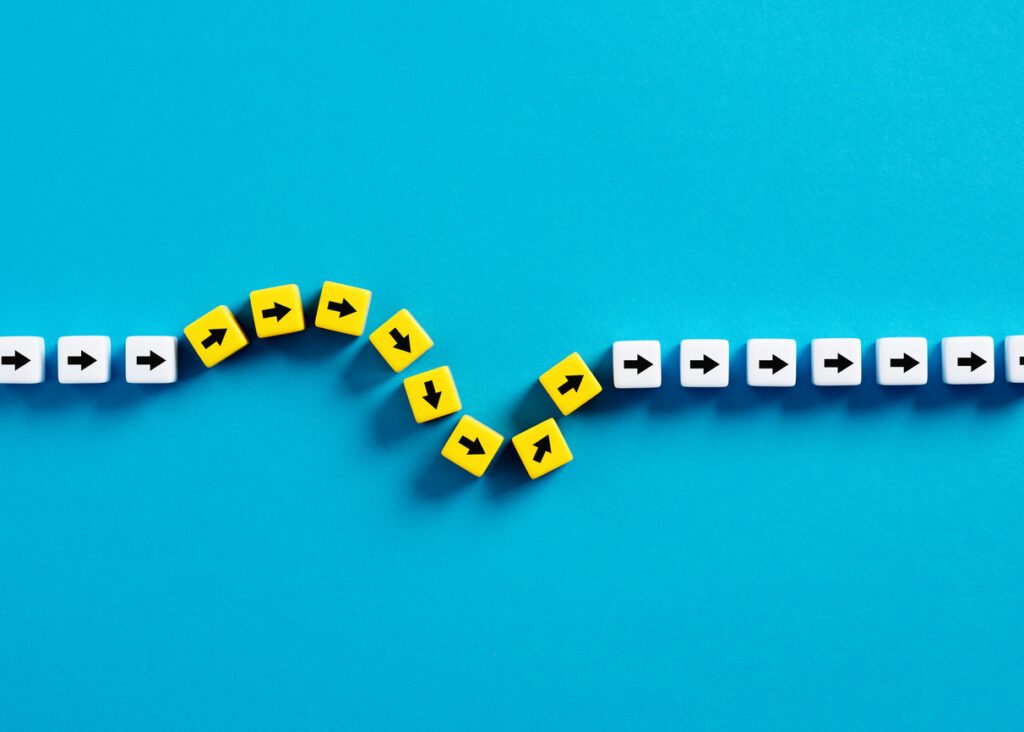
breaking free from cycle of enmeshment arrows deviating from path

How Do You Break The Cycle Of Enmeshment?

If someone wants to break this cycle, it’s not enough to just recognize and address it. A fundamental change in the relationship dynamics has to take place. Although this process can be very challenging, it’s essential for establishing long-term healthy relationships.

1. Consistent Boundary Enforcement

It’s important to regularly reinforce personal boundaries. This might include frequent reminders to others about individual needs and limits. Being vigilant against slipping back into old patterns is key, as is preparing to stand firm against resistance or challenges from others.

2. Role Reassessment and Modification

A critical step is to reassess and modify roles within the relationship. For instance, stepping back from a caretaker role allows others to take responsibility for their emotions and decisions, fostering a healthier, more balanced dynamic.

3. Education on Healthy Relationships

There are many resources out there that can help people understand healthy relational dynamics. Engaging with books, workshops, or therapy sessions can provide insight and tools on how to heal from enmeshment and foster healthier relationships.

4. Building External Support Systems

Establishing relationships outside of these unhealthy connections is one of the most important parts of pulling away from this dynamic. Joining clubs, groups, or forming new friendships that offer different perspectives and respect individuality can be instrumental in breaking the cycle.

5. Self-Compassion and Patience

Recognizing that this process is gradual and might involve setbacks is important. This journey will be easier to handle with a lot of self-compassion and patience.

How Do You Recover From Enmeshment?

Recovery from this harmful dynamic can feel like stepping into a new chapter of personal discovery and growth, where the focus shifts from intertwined relationships to the richness of one’s individual life. It’s a journey marked by learning to appreciate one’s unique qualities and forging a path defined by personal choices and aspirations, rather than the dictates of others.

Central to this journey is the development of a nurturing relationship with oneself. This involves engaging in an ongoing, compassionate self-dialogue, discovering the joys of solitude, and appreciating one’s own company. The individual creates a space for self-understanding, where they can explore and embrace personal preferences and passions.

Another important part of learning how to heal enmeshment trauma is embracing vulnerability. This means the individual can allow themselves to feel a range of emotions, including those previously ignored or suppressed. This process helps in building trust in one’s emotional instincts, recognizing them as valid and insightful.

Redefining personal success and fulfillment plays a significant role too. This involves setting goals that resonate with individual values and celebrating every achievement as a step towards a more authentic self, regardless of its scale.

How Do You Treat Enmeshment Trauma?

Healing enmeshment trauma requires a comprehensive approach that addresses the emotional and psychological aspects of an individual’s well-being. This approach is usually a combination of professional guidance and personal efforts.

1. Therapeutic Approaches

Engaging in specialized therapies such as Cognitive Behavioral Therapy (CBT) or Eye Movement Desensitization and Reprocessing (EMDR) can be highly effective in addressing the root causes of trauma. These therapies help individuals process their experiences and reframe them in a healthier context.

2. Support Network Development

Building a strong support network is a vital part of overcoming enmeshment. Forming connections with friends, family members, or support groups who understand the challenges of this dynamic can provide crucial emotional support and a sense of belonging.

3. Self-Care and Relaxation

Incorporating self-care practices such as meditation, yoga, or engaging in hobbies can significantly help in recovery. These activities may offer relaxation and stress relief, which are important in managing symptoms of anxiety or depression that often accompany trauma.

4. Fostering Independence

Developing a sense of independence is another important part of this journey. This involves pursuing personal goals and interests that reinforce one’s sense of self, creating a distinct and healthily independent life.

5. Boundary Maintenance

Consistently maintaining and respecting personal boundaries is one of the most important parts of healing. This practice establishes a safe emotional space, allowing individuals to feel more in control of their relationships and emotional well-being.

What Is The Best Therapy For Enmeshment?

Selecting the best therapy depends on the individual’s unique needs and circumstances. However, certain therapeutic approaches have proven particularly effective in addressing the consequences of this dynamic.

1. Family Systems Therapy

This therapy is beneficial for understanding and changing dysfunctional family dynamics. It enables individuals to recognize their roles within the family and how these dynamics contribute to the dysfunction. If the whole family works together, there is a high chance that the dynamic could shift.

2. Individual Psychotherapy

Focusing on the individual’s experiences within these relationships, this therapy helps in exploring personal boundaries, identity, and emotional independence. It offers a space for deep self-exploration and healing.

3. Cognitive Behavioral Therapy (CBT)

CBT can be helpful for individuals who want to alter their thought patterns and behaviors. It may assist individuals in recognizing and changing negative thoughts. This might make it easier for them to establish healthier patterns of relating to others.

4. Trauma-Focused Therapies

Therapies like EMDR might be effective for healing enmeshment trauma. They focus on processing and recovering from traumatic experiences related to these dysfunctional relationships.

5. Group Therapy/Support Groups

These settings provide a community of individuals who share similar experiences. Participating in group therapy or support groups can offer unique insights, shared learning, and a sense of solidarity, which can be incredibly supportive in the healing process.

Begin Your Journey To Healing Enmeshment Trauma With PIVOT

Finding balance in connections where the lines of individuality are blurred can be an overwhelming task. PIVOT stands ready to assist you in navigating these complex waters. At our peaceful Glass House Retreat, we offer a sanctuary where understanding and growth go hand in hand. We have a time tested process to help you see your trauma and also learn to tolerate and navigate your unique experiences. Our highly trained coaches are dedicated to providing personalized support, helping you identify and address harmful patterns. With PIVOT, you’ll gain the strength and knowledge to establish healthier boundaries and foster relationships that respect your individuality. Embrace a new chapter of relational harmony and self-discovery with us today.

What is an Enmeshed Family? Signs, Examples, and Impact

Emotional closeness is a cornerstone of family life, fostering connection and support. But when this closeness crosses into enmeshment—where emotional boundaries blur and individuality fades—it can create deep challenges. Enmeshment might look like struggling to make decisions without family approval, feeling overwhelmed by others’ emotions, or having no personal space.

For those dating someone from an enmeshed family, the impact can hit hard—perhaps you’re caught in a tug-of-war for their attention or wrestling with boundaries that never seem to stick. These situations can feel exhausting and isolating, but you’re not alone, and there’s a way forward.

In this article, we’ll unpack what enmeshment really means, spotlight the signs to watch for, and share practical steps to navigate its effects—whether you’re in the family or supporting a partner through it. Keep reading for clarity, strategies, and hope for healthier relationships.

What Is An Enmeshed Family?

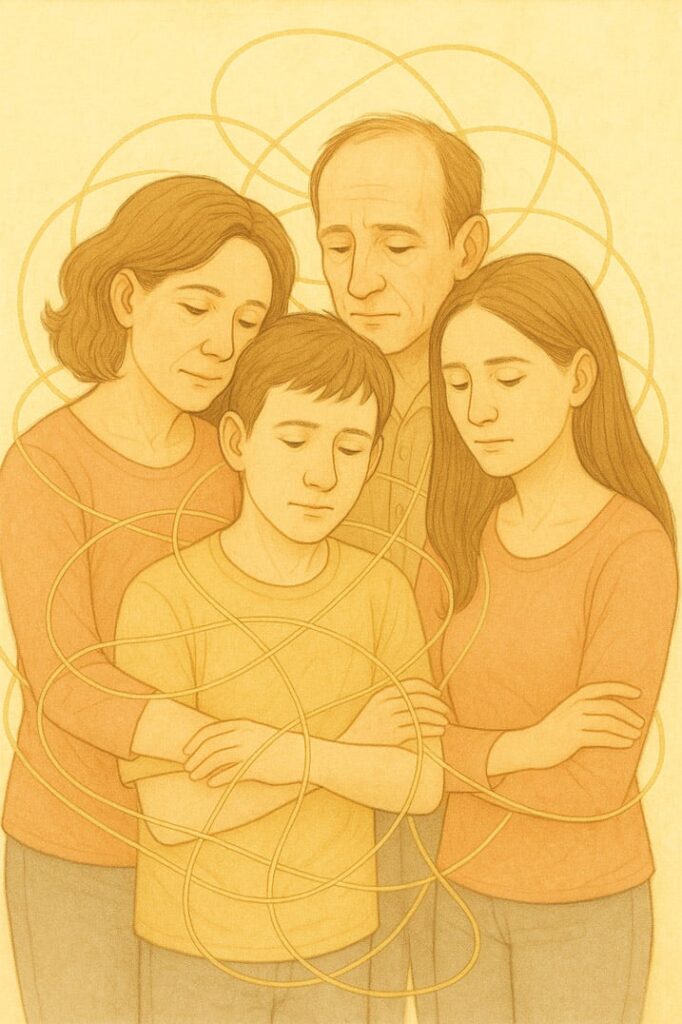
enmeshed family dynamics illustration

In modern psychology, familial enmeshment is a framework used to describe a family system or dynamics characterized by:

  • Blurred or porous boundaries;
  • Confused roles and expectations;
  • Limited individuality and personal autonomy;
  • Emotional over-identification among its members.

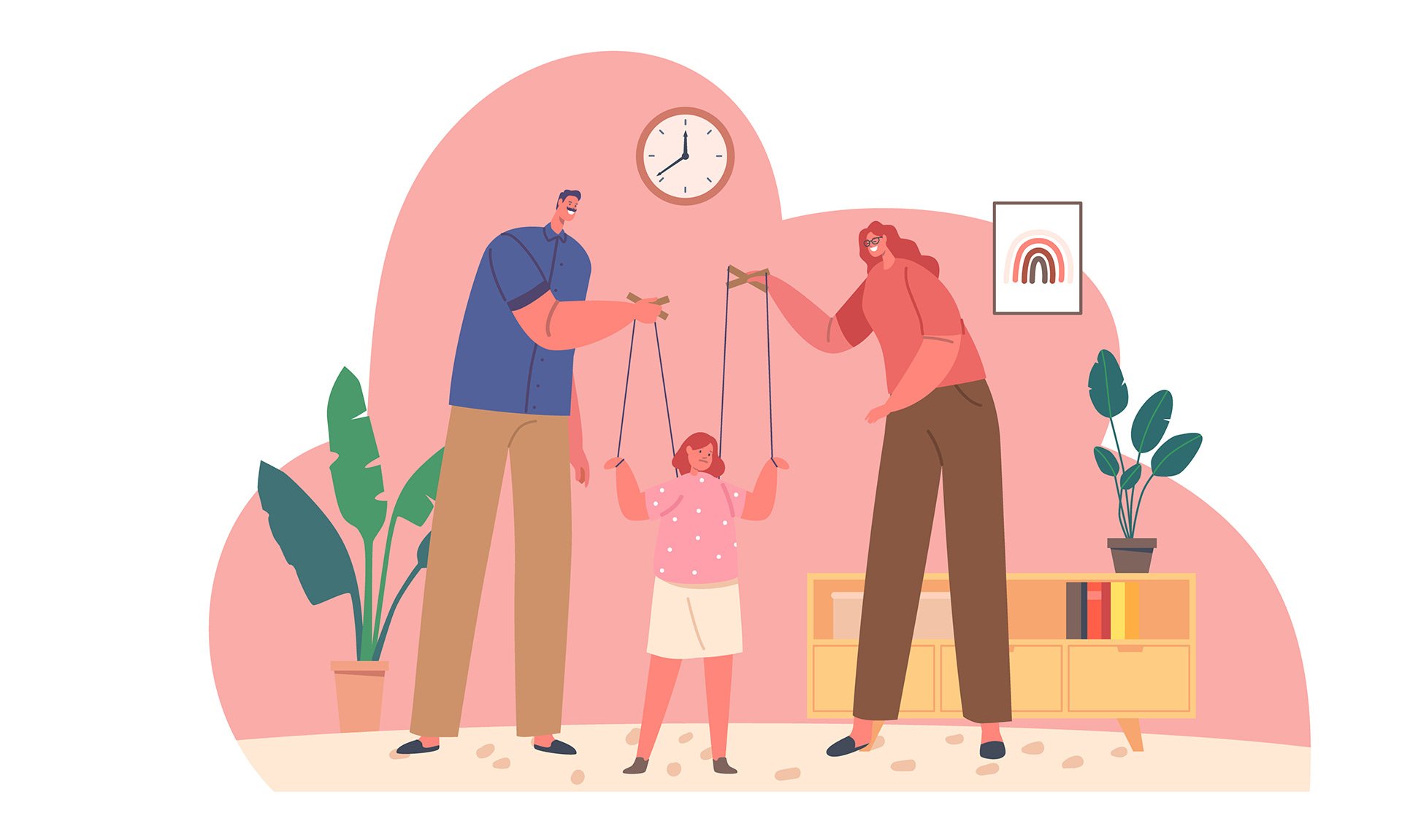
In these families, there’s often a high degree of emotional fusion, where others closely mirror the feelings of one family member. This typically creates an environment (system) with an extreme level of interconnectedness, in which the thoughts, feelings, and behaviors of individual family members become indistinguishable from one another.

While closeness in familial relationships is empowering and elevating, when taken to the extreme, it becomes the polar opposite. This is the case with enmeshed systems, which are known to hinder the development of personal identity and autonomy. 

These characteristics are salient in children who are a part of or originate from enmeshed families and can persist into adulthood if not addressed. However, parents and other family members can exhibit these traits with the same and, sometimes, greater intensity.

The last thing to note is that the prevalence and intensity of familial enmeshment aren’t set values. They can vary depending on the influence of factors such as family history, societal/cultural norms, communication styles, and personality traits. 

The complexity of named factors, along with their sheer volume, makes recognizing and addressing the signs of enmeshed family extremely challenging without a professional therapeutic approach.

What Are The Signs Of An Enmeshed Family?

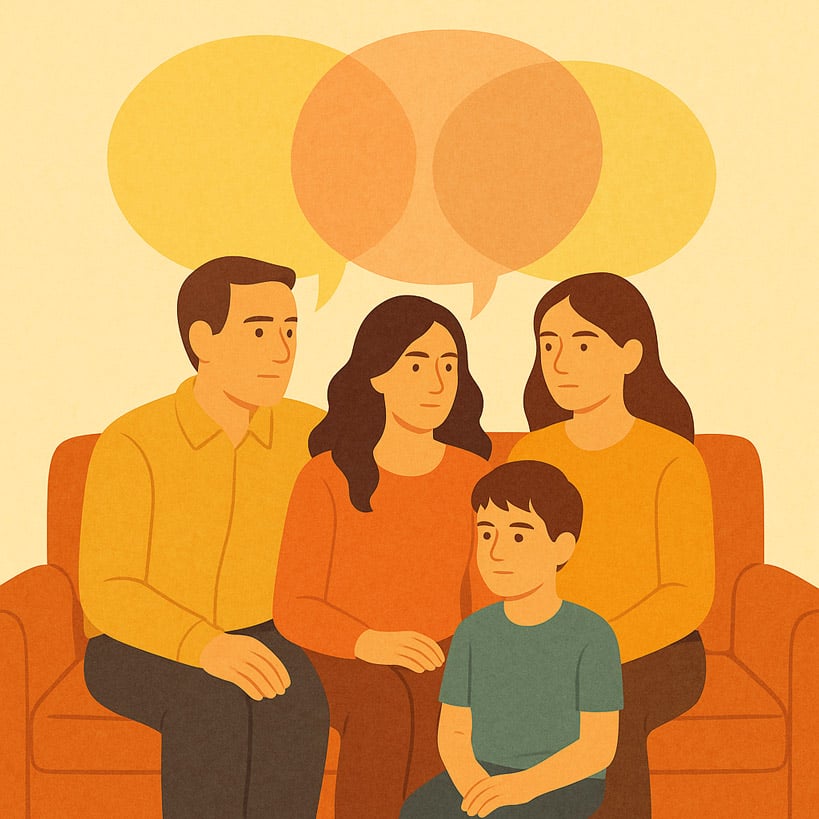
signs of family enmeshment thoughts conversations overlap

Family enmeshment can manifest itself in numerous ways and its signs can be challenging to recognize, mostly because they share similar characteristics with some psychological disorders such as codependency or attachment dysregulation.

Therefore, to minimize the chance of confusion and make the signs easier to distinguish from said issues, we’ll be splitting them into two distinct categories (parental and child enmeshment), with enmeshed family examples after each for added clarification:

Parental Enmeshment

Enmeshed parents may exhibit the following behaviors/traits:

  • Disregard for individual autonomy: Difficulty respecting or recognizing the independence of a child.
    • Example: A parent makes decisions for their children without consideration of their needs, desires, or preferences.
  • Over-involvement: Compulsion to know and influence every detail of a child’s life.
    • Example: Constantly monitoring and dictating the course of the child’s romantic relationship.
  • Blurred boundaries: Limited ability to establish a definitive parent-child dynamic within a family unit.
    • Example: Sharing inappropriate details about personal life with a child.
  • Emotional fusion: Mirroring the emotional state of the child, even to the point of extreme.
    • Example: Feeling deeply stressed or anxious when a child faces challenges, whether at school, work, or personal.
  • Over-identification: A parent ties their self-worth to that of their child.
    • Example: Pressuring a child to pursue a parent’s unfulfilled aspirations.
  • Isolation: Believing they can provide every form of support to their child.
    • Example: Discourage a child from reaching out to anyone outside the established (enmeshed) circle.

Child Enmeshment

Children from enmeshed families may exhibit the following signs:

  • Limited individuality: Not having a clearly defined sense of self; feeling like being lost;
    • Example: A child adopts the interests or goals of the parent rather than exploring their preferences.
  • Caregiving tendencies: Feeling overly responsible for the welfare of others;
    • Example: A child feels obligated to solve their parents’ problems, neglecting their well-being.
  • Over-dependence: Basing self-worth on the opinions of their enmeshed parents;
    • Example: Feeling an overwhelming need for approval and validation from parents.
  • Lack of autonomy: Acting or behaving in ways that align with parent’s expectations.
    • Example: Pursuing the unfulfilled aspirations of the parent despite not sharing their interests.
  • Conflict avoidance: Keeping away from any confrontation out of fear of disrupting the illusion of a harmonious family dynamic; not knowing how to say “no”;
    • Example: Consistently refraining from expressing own opinions and, instead, conforming to parents’ viewpoints.
  • Struggling with personal boundaries: Difficulties maintaining personal space and privacy.
    • Example: (Over)Sharing inappropriate details about their intimate relationships with anyone, even recent acquaintances.

It should be noted that familial enmeshment is highly individual. The intensity can vary and the signs can manifest to differing degrees, depending on numerous factors such as personality traits, upbringing, cultural influences, and life experiences.

This is why addressing the issue must be done on a per-person basis and one step at a time, using methods tailored to the individual and strategies that consider each characteristic.

What Does An Enmeshed Mother Look Like?

An enmeshed mother (or parent, in general) may exhibit one or more of the above mentioned traits and behaviors. For her, a child is the center of her universe and the object upon which she bases her self-worth. However, this often goes to the extreme, where a child becomes their “best friend” and confidant, as well as the source of emotional well being and support.

In addition, she may tend to be overly involved in their children’s lives. This includes trying to make every decision for them, intervening in their affairs, and demanding to know every little detail, even if sharing those details would be inappropriate.

Next, she would often try to imprint her beliefs, morals, personality, and even goals onto the child, pushing it in the direction she considers “right” – even if the child does not share in her views and interests.

Lastly, an enmeshed mother may actively try to dissuade the child from pursuing their goals, asserting their needs, or realizing autonomy in any other way. However, doing so effectively fosters mutual dependency, in turn hindering the personal growth and development of both individuals.

forest trees under magnifying glass to depict monitoring in families

Are Enmeshed Parents Narcissistic?

There’s no simple “yes” or “no” answer to this question, as narcissism and enmeshment are two distinct concepts:

While they occur independently, enmeshment and narcissism can coexist, with the latter typically contributing to the enmeshed family dynamics. The reason for this lies in one of the defining characteristics of narcissism: blatant disregard for personal boundaries and autonomy, which can reinforce enmeshing dynamics.

Alternatively, enmeshment can be used as a manipulation tool by a narcissistic partner or parent to foster dependency and elicit caregiving behavior that would benefit none other than the manipulative narcissist at the expense of the other person’s well-being.

It must be noted that not all enmeshed individuals are narcissistic by default, and not all narcissists necessarily create enmeshed family dynamics. However, they do play into each other, generally enforcing harmful and toxic behaviors to the detriment of all individuals in a relationship.

Dating Someone from an Enmeshed Family

Dating someone from an enmeshed family can present unique challenges, as their family dynamics may influence your relationship. You might feel like you’re competing for your partner’s time and attention, especially if their family expects constant involvement or disapproves of choices prioritizing your relationship. Boundary violations, such as uninvited family input on your plans, can also strain your connection. Additionally, your partner may struggle with guilt or anxiety when balancing family expectations with your needs, rooted in deep-seated attachment patterns.

To navigate these dynamics, open communication is key. Discuss your needs calmly, like setting aside dedicated couple time without family interruptions. Work together to establish healthy boundaries, such as limiting how often family members are involved in decisions. If challenges persist, couples therapy can provide tools to strengthen your relationship while respecting their family ties. Understanding these patterns can foster empathy and build a healthier partnership.

Challenges and Solutions When Dating Someone from an Enmeshed Family

ChallengeHow to Address It
Difficulty setting boundaries with your partner’s familyCommunicate openly with your partner about your needs. Work together to set clear boundaries, such as limiting family involvement in your personal plans or decisions.
Feeling like an outsider or competing for attentionBuild relationships with family members to foster connection, but prioritize dedicated couple time without family interruptions to strengthen your bond.
Partner’s guilt or anxiety about prioritizing the relationshipEncourage your partner to express their feelings. Support them in making decisions that prioritize your relationship, and consider therapy if guilt or anxiety persists.
Family expectations interfering with the relationshipDiscuss family events or requests as a team. Agree on how to handle them in a way that respects both your relationship and their family ties.
Partner’s struggle with independence or identityEncourage your partner to explore their own interests and build a sense of self outside the family. Support their growth while being patient with the process.
Impact on intimacy or trust in the relationshipAddress any trust issues by fostering open communication and understanding. Consider couples therapy to work through deeper issues related to enmeshment.

Frequently Asked Questions about Enmeshed Families and Relationships

1. How does enmeshment affect a person’s ability to form healthy relationships?

Enmeshment can make it hard for someone to set healthy boundaries, often leading to codependency or difficulty trusting others outside their family. They might prioritize their family’s needs over their own, which can strain romantic relationships and make independence a challenge.

2. What are the emotional consequences of growing up in an enmeshed family?

People raised in enmeshed families may feel guilt, anxiety, or resentment when they try to carve out their own space. They might also struggle with a shaky sense of self or find it tough to express emotions independently of their family’s influence.

3. What should I expect when dating someone from an enmeshed family?

You might notice your partner struggles to say “no” to their family, or that their family often meddles in your relationship. They could feel caught between you and their family’s expectations, so patience and clear communication will be essential.

4. How can I support my partner in setting boundaries with their enmeshed family?

Gently encourage your partner to voice their own needs and start with small boundaries, like keeping some decisions just between the two of you. Be there for them as they deal with any guilt or resistance from their family—it’s a big step, and your support matters.

Break Free from Enmeshed Family Patterns with PIVOT

If you’re struggling with the effects of an enmeshed family—whether in your own life or through a relationship—know that you’re not alone, and there is a path forward. At PIVOT, we specialize in helping individuals like you reclaim your individuality and autonomy. Our highly trained and certified coaches are here to guide you through this journey, offering tailored professional support to meet your unique needs. Take the first step toward healthier, more fulfilling relationships by reaching out today to learn more about our transformative Glass House Retreat.

pivot company logo with tagline